


Everything you need to know to plan a breathtaking wedding in Italy — venues, regions, legalities, costs and more, written by the editorial team at In The Fable Cameraworks. ITF is a global wedding media production specialising in creative direction and destination weddings, with experience producing multicultural celebrations across Apulia and Italy, including Indian, South Asian and international weddings.
There’s a reason Italy has been the world’s most romanticised country for centuries. It’s not just the landscapes — though they are, by any measure, extraordinary. It’s the light. That particular golden-hour glow that falls over a Tuscan hillside in September, or catches the surface of Lake Como on a still morning, is unlike anything you’ll find anywhere else on earth. It turns an already beautiful wedding into something cinematic.
But Italy isn’t just a pretty backdrop. It is a country that understands celebration — deeply, culturally, in its bones. The food is extraordinary. The wine is world-class. The venues, whether a medieval castle, a Baroque palazzo or a cliff-hanging terrace on the Amalfi Coast, carry centuries of history that no purpose-built wedding venue can replicate. And the Italians themselves bring a warmth and generosity to hospitality that makes every guest feel not just welcomed, but looked after.
Italy has become the destination wedding capital of the world for couples from the UK, the US, the Middle East, India, and beyond. And yet, planning a wedding here — navigating the regional choices, the legal requirements, the vendor landscape, the logistics of flying in 150 guests — is genuinely complex. That’s exactly what this guide is for.
We’ve distilled everything you need to know: the best regions and when to visit them, how to choose and interrogate a venue, what the legal process actually involves, what it costs at different scales, and how to create a guest experience that makes the journey worth every mile. Whether you’re planning an intimate elopement on the Amalfi Coast or a multi-day Indian wedding in a Puglia masseria, this is your starting point.
Why Italy? The Case for an Italian Destination Wedding
Couples who choose Italy for their wedding rarely need convincing — they usually arrive with a feeling and just need the practicalities confirmed. But if you’re still weighing your options, here’s what makes Italy genuinely different from every other destination.
The Backdrops Are Genuinely Unmatched
Italy’s landscape diversity is extraordinary. Within the same country, you can choose between the lakeside drama of Como and Maggiore, the rolling patchwork of the Tuscan hills, the volcanic rawness of Sicily, the baroque splendour of Puglia’s whitewashed masserie, the clifftop villages of the Amalfi Coast, the alpine grandeur of the Dolomites, and the watery magic of Venice. No other European country offers this range — and in every case, the scenery is effortlessly, unapologetically beautiful.
This matters practically, because it means Italy works for an enormous range of wedding aesthetics: from the sleek and editorial to the rustic and romantic, the grand and palatial to the intimate and hidden. You won’t have to compromise your vision to fit the destination. The destination will fit your vision.
The Food and Wine Culture Is a Wedding in Itself
Italian food is arguably the world’s most beloved cuisine for a reason — it is grounded, generous and ingredient-led. A wedding menu built around Sicilian seafood, Tuscan truffles, hand-rolled pasta and locally-pressed olive oil is, in itself, a cultural experience. The wine lists at Italian venues often pull directly from the estate’s own production. According to Wine Spectator, Italy is home to over 350 authorised wine varieties across 20 regions — making it the world’s most complex wine country. Your guests will drink very well.
This culinary depth means that even if your wedding incorporates a hybrid menu — say, Indian mains alongside Italian antipasti — the dining experience will be seamless and high-quality. Italian catering teams, particularly those experienced in international weddings, are exceptionally good at weaving multiple food traditions into a cohesive banquet.
The Venue Stock Is Extraordinary
Italy has been accumulating beautiful buildings for two thousand years, and a remarkable number of them are available to hire for weddings. Hilltop castles with drawbridges. Renaissance villas with frescoed ceilings and manicured gardens. Working vineyards with limestone cellars that convert into extraordinary dining spaces. Cliff-top terraces above the Tyrrhenian Sea. This is not a country where you’ll struggle to find somewhere beautiful — the challenge is narrowing it down.
Crucially, many of Italy’s finest venues offer full exclusive hire, meaning your wedding party is the only one on the property. This gives you a level of creative freedom — over music, timings, catering, décor, flow of the day — that venues in more commercially active destinations simply can’t offer.
Italy Works Across Cultures and Faiths
One of Italy’s greatest strengths as a wedding destination is its adaptability. The country’s historic relationship with ceremony and ritual — through its own Catholic tradition — means that venues and local professionals understand the importance of getting ceremony right, regardless of the faith or tradition involved. Hindu mandap setups, Jewish chuppah arrangements, humanist ceremonies, interfaith ceremonies, multi-day South Asian celebrations: all are increasingly well-catered for.
This has made Italy the fastest-growing destination for luxury Indian and South Asian weddings originating from the UK, the US, the UAE, and directly from India. More on this below.

Choosing Your Italian Region: A Guide to the Main Wedding Destinations
This is usually the first — and most enjoyable — decision you’ll make. Each Italian region has its own character, its own light, its own pace. What follows is an honest portrait of each, including who each one suits best.
Lake Como and the Italian Lakes
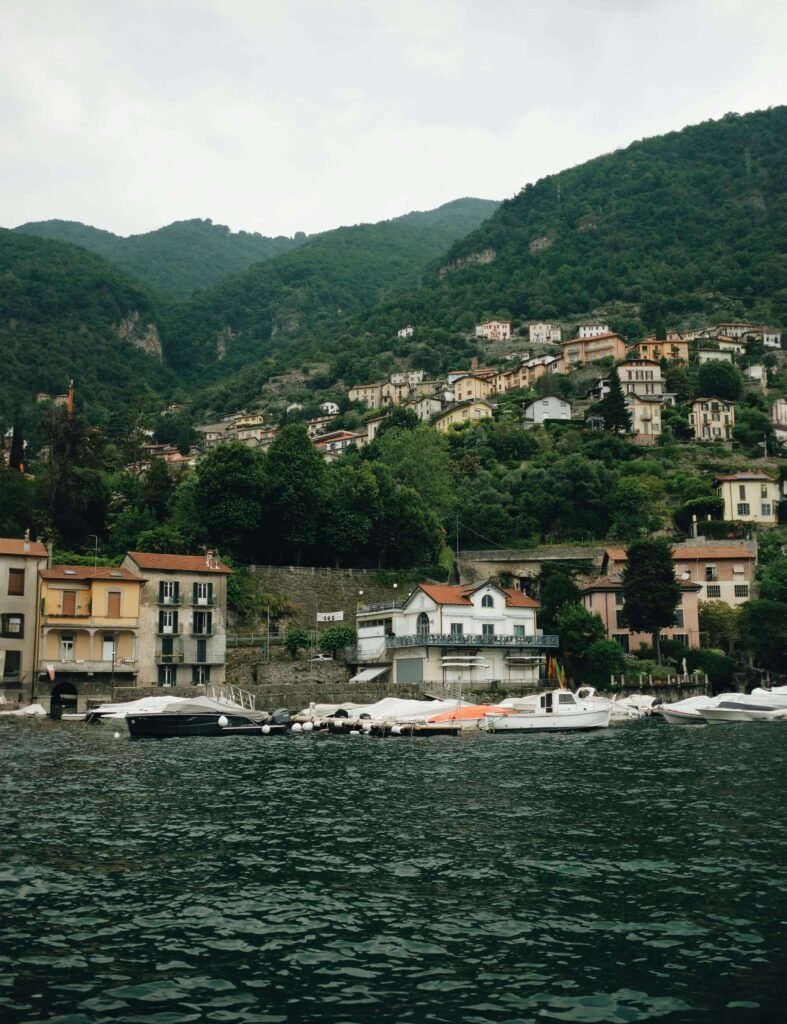
Lake Como is the most sought-after wedding destination in Italy, and it’s not hard to understand why. The combination of dramatic alpine scenery, clear deep-blue water, and a collection of historic villas that range from the palatially grand to the intimately beautiful has made it a byword for romantic luxury. It became globally iconic after George Clooney’s Villa Oleandra, and was further cemented by Deepika Padukone and Ranveer Singh’s wedding at Villa del Balbianello in 2018.
Standout venues include Villa del Balbianello, Villa Erba (one of the few properties that can comfortably handle 300+ guests), Mandarin Oriental Lago di Como, and Villa d’Este. Lake Maggiore offers similar scenery with slightly fewer crowds and excellent properties including the Grand Hotel Dino.
A few practicalities worth knowing: Lake Como has strict environmental regulations that govern music curfews (usually midnight) and the use of fireworks. Road access to some lakeside venues is narrow and requires careful transfer planning. And it books early — top properties for September and May are typically gone 18 to 24 months in advance.
Best for: Couples seeking iconic glamour, photogenic waterscapes and a European elegance aesthetic. Excellent for Indian and South Asian weddings requiring large indoor and outdoor spaces. Lake Como is truly the ideal choice for an Italy destination wedding.
Tuscany and Chianti
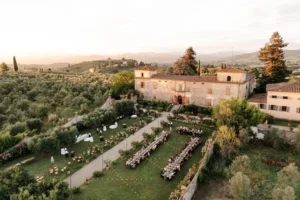
Tuscany is Italy’s most versatile wedding region, and the one with arguably the deepest stock of extraordinary venues. The rolling hills of the Val d’Orcia — a UNESCO World Heritage Site — the Chianti wine country between Florence and Siena, and the medieval villages of the Mugello offer an enormous range of settings: working vineyards, hilltop castles, Renaissance villas, sprawling private estates.
Among the most celebrated venues: Castello di Vincigliata near Fiesole, Il Borro (a private medieval village once owned by the Ferragamo family, now a luxury resort and wedding venue), and the palaces and villas around Lucca. Tuscany’s rural estates are particularly well-suited to multi-day celebrations — the space, accommodation and flexibility they offer is unmatched.
Tuscany also tends to have more permissive noise policies than city venues. Late-night parties, live music into the early hours, outdoor dancing — all more achievable here than in urban locations.
Best for: Rustic-luxe and wine country romance, estate buyouts for multi-day celebrations, couples wanting maximum creative flexibility.
The Amalfi Coast and Ravello
The Amalfi Coast is one of the most dramatic stretches of coastline in the world — a UNESCO-listed landscape of vertical cliffs, terraced lemon groves, and colourful fishing villages tumbling towards the Tyrrhenian Sea. Ravello, perched 350 metres above the water, is its wedding jewel: the Villa Cimbrone with its Terrace of Infinity, and Villa Rufolo with its Norman architecture and clifftop gardens, are among the most photographed wedding settings on earth.
This beauty comes with practical complexity. The roads are narrow — genuinely narrow, single-track in places — which makes guest transportation a serious logistical exercise. Boats are often part of the solution, which adds expense but also drama. The Amalfi Coast also tends to suit smaller, more intimate guest numbers: the infrastructure simply doesn’t support very large weddings.
Best for: Intimate weddings (30–80 guests), couples for whom photography and aesthetics are paramount, honeymoon-extension itineraries.
Rome and Lazio
Rome offers something no other Italian city can: the sheer accumulated weight of two and a half thousand years of history, worn lightly and lived in daily. Weddings in Rome take place in converted palazzos, at iconic hilltop venues, in the gardens of historic villas, and — for civil ceremonies — at the Campidoglio, Rome’s city hall, one of the most architecturally significant civic buildings in the world.
Key venues include the Four Seasons Hotel Rome (inside a 15th-century cardinal’s villa), Villa Aurelia, Villa Aldobrandini in Frascati, and the Palazzo Colonna. Rome also offers an unmatched guest experience — your guests will be spending time in one of the world’s great cities, with world-class restaurants, museums, and neighbourhoods to explore.
Best for: Larger weddings where guest experience and cultural richness matter, couples who want a cosmopolitan, city-based celebration.
Florence and Surrounds – For an Iconic Italy Destination Wedding
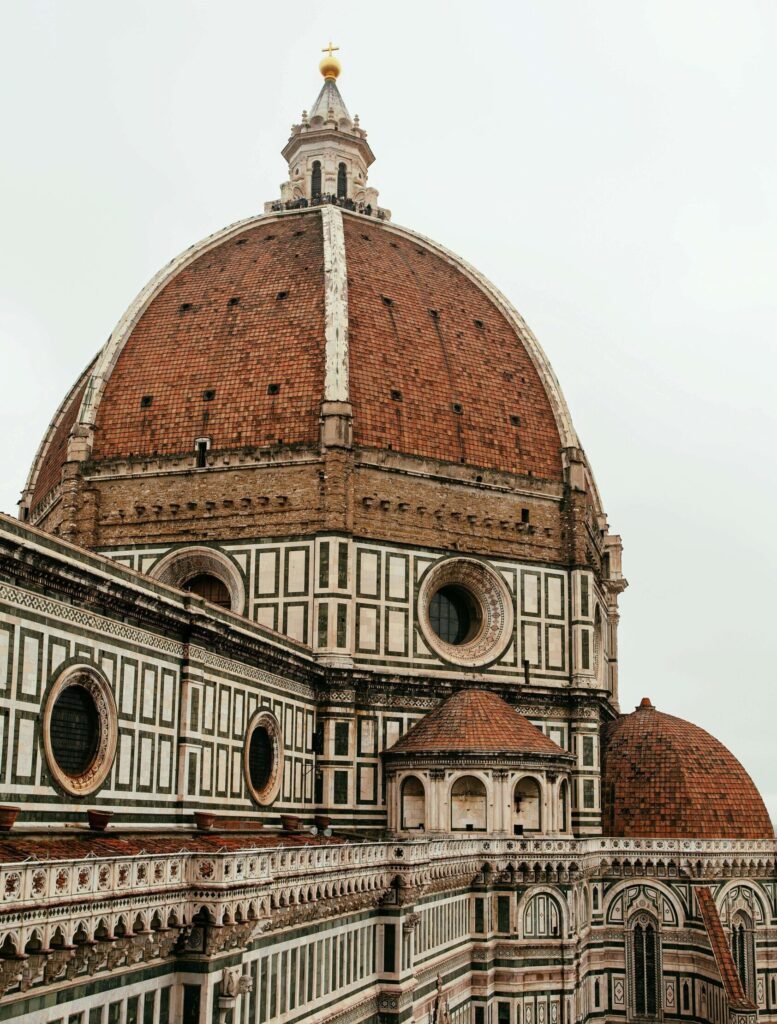
Florence is the Renaissance made physical — it is a city of extraordinary architecture, art, and design, and its wedding venues reflect this. The Four Seasons Firenze, set within a 15th-century convent with two hectares of private gardens, is one of Italy’s finest wedding hotels. Villa Cora, perched above the city with panoramic views, is another exceptional option. For those who want the cultural richness of Florence with the escape of the countryside, Borgo Santo Pietro in the Sienese hills offers an extraordinary combination.
Best for: Culturally-minded couples, those who want architectural grandeur without the logistics of Rome, proximity to both city and countryside.
Venice
Venice is unlike anywhere else on earth, and a wedding here — arriving by gondola, exchanging vows in a frescoed palazzo, dining above the Grand Canal — is a genuinely singular experience. Aman Venice is the benchmark property: a 16th-century palazzo that is simply one of the most extraordinary wedding venues in existence. The Cipriani and Palazzo Pisani Moretta are excellent alternatives.
The honest caveats: Venice does not scale. The narrow calli, the water logistics, the lack of outdoor space, and the city’s preservation rules all mean it works best for intimate weddings of under 80 guests. And the crowds in summer are real — consider a spring or autumn wedding to avoid them.
Best for: Elopements and intimate weddings, architecturally-driven couples, those for whom the experience of Venice is as important as the wedding itself.
Sicily
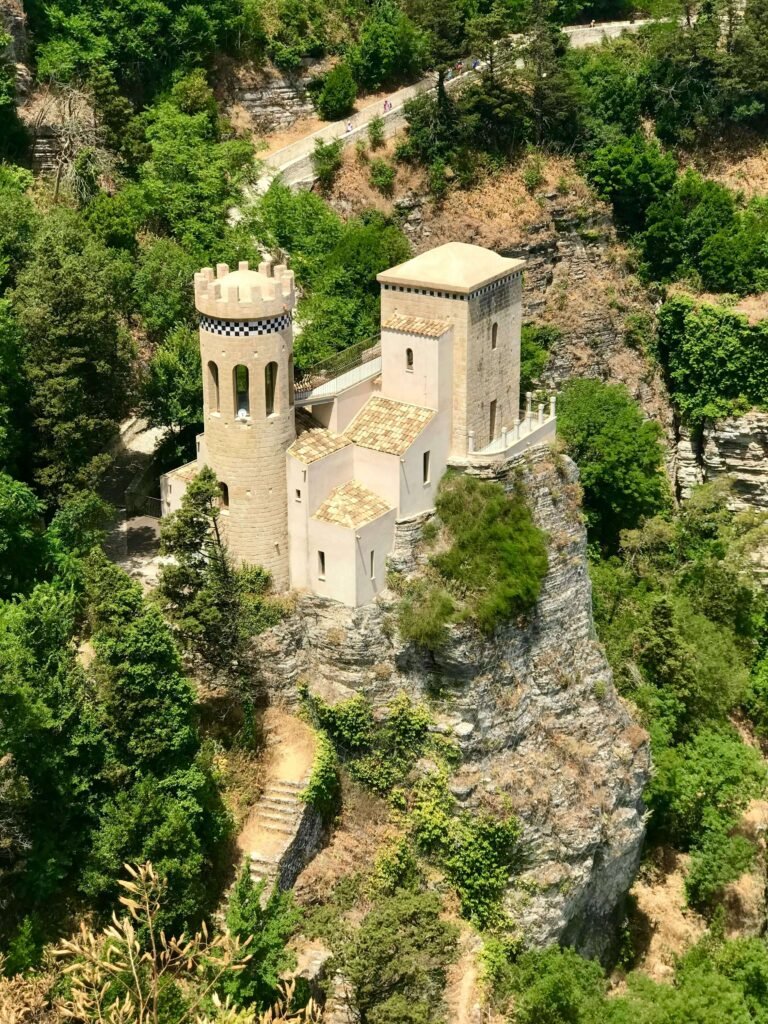
Sicily is Italy’s emerging luxury wedding destination, and couples who discover it tend to fall deeply in love with it. The baroque towns of the Val di Noto — Noto, Ragusa Ibla, Modica — offer some of the most architecturally distinctive settings in Italy: honey-coloured limestone, ornate facades, extraordinary light. Add the drama of Mount Etna as a backdrop and you have something genuinely unlike the Lakes or Tuscany.
Sicily also benefits from a slightly longer season than northern Italy — October and even early November remain warm and beautiful. The food culture is extraordinary, rooted in Arab, Norman and Greek influences. According to Lonely Planet, Sicily’s UNESCO-listed baroque towns are among southern Europe’s most underrated travel experiences.
Best for: Couples who want something distinctive and less well-trodden, late-season weddings, adventurous aesthetics, extraordinary food. Those who love culture and colours, need not look beyond Sicily for an Italy destination wedding.
Puglia

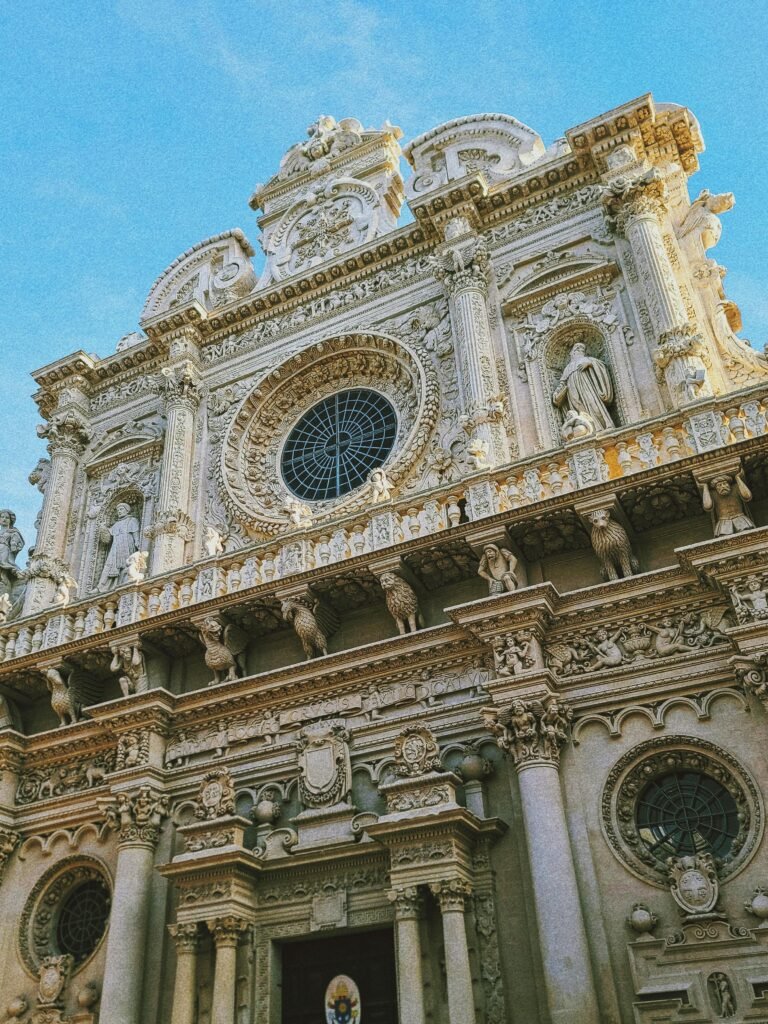
Puglia — the heel of Italy’s boot — has been transformed in the last decade from an under-the-radar agricultural region into one of Italy’s most sought-after luxury destinations. The landscape is distinctive: flat plains of ancient olive groves, limestone trulli (the conical white-walled farm buildings unique to this region), whitewashed masserie (fortified farmhouses) surrounded by wildflowers. The towns of Ostuni, Alberobello, and Lecce are architectural gems.
The masserie of Puglia are particularly well-suited to large South Asian and Indian weddings: they offer genuine outdoor ceremony spaces (essential for pheras), large indoor halls for sangeet and mehendi, and often full accommodation on site. The flat terrain, the warm climate, and the open spaces mean that the multi-day, multi-function format of an Indian wedding works exceptionally well here.
Best for: Outdoor ceremonies, multi-cultural and South Asian weddings, authentic Italian character, multi-day celebrations.
The Dolomites
For couples who are drawn to alpine grandeur — the jagged, otherworldly peaks of the Dolomites, a UNESCO World Heritage Site — Cortina d’Ampezzo offers a wedding experience entirely unlike anything else in Italy. Winter weddings in the snow, or summer celebrations with the meadows in bloom, both produce extraordinary photographs.
This is a niche choice, but a distinctive one, and the proximity to Austria and Switzerland makes it ideal for couples who want to combine their celebration with an alpine honeymoon.
Best for: Non-traditional couples, nature-first aesthetics, winter weddings.
Region at a Glance
| Region | Vibe | Best For | Peak Season |
| Lake Como | Iconic glamour | Large weddings, South Asian | Apr–Oct |
| Tuscany | Rustic-luxe | Estate buyouts, multi-day | May–Oct |
| Amalfi Coast | Dramatic coastal | Intimate, editorial | Apr–Jun, Sep |
| Rome | Historic grandeur | City celebrations, large groups | Mar–Jun, Sep–Oct |
| Florence | Renaissance culture | Mid-size, city + country | Apr–Jun, Sep–Oct |
| Venice | Unique, intimate | Elopements, small groups | Apr–Jun, Sep |
| Sicily | Raw, emerging | Late-season, distinctive | May–Nov |
| Puglia | Authentic, open | Indian/Asian weddings, outdoor | May–Oct |
| Dolomites | Alpine drama | Winter, non-traditional | Dec–Mar, Jun–Aug |
Destinations In Depth
The Best Time of Year for an Italy Destination Wedding
Italy’s climate varies considerably by region, but as a general rule, the wedding season runs from April to October. Within that window, your choice of timing will affect not just the weather but the availability and cost of venues, the crowds at tourist sites, and — crucially — the quality of the light for your photographs.
| Season | Months | Avg Temp | Verdict |
| Spring | April – June | 18–24°C | Excellent. Wildflowers, mild temperatures, shoulder-season pricing. |
| Summer | July – August | 28–38°C | Popular but expensive. Heat can affect outdoor ceremonies; schedule for late afternoon. |
| Autumn | Sept – October | 18–26°C | Often the best choice. Golden light, harvest season, quieter, stunning photography. |
| Winter | Nov – March | 5–14°C | Limited. Dolomites/Christmas markets excepted. Most venues close. |
September and October: The Real Sweet Spot
Ask any experienced Italy wedding photographer or planner and they’ll tell you the same thing: September and October are the finest months. The summer crowds have thinned, the temperatures are warm but comfortable, the vineyards are in harvest, and the light — that famous Italian golden-hour light — reaches its most beautiful. These months book out fastest at top venues, often 18 to 24 months in advance.
Spring: Underrated and Beautiful
- April and May offer wildflower-covered hillsides, pleasant temperatures (18–24°C), and venue availability that’s easier to secure than the peak months.
- June is also excellent, though you’ll start to feel the summer premium on pricing. For couples who want a beautiful Italian wedding without the peak-season competition.
- May is also a particularly strong choice.
A Note on Booking Windows
Popular venues in Italy book faster than couples often expect. For a September or October wedding at a well-known Lake Como or Tuscany venue, 18 to 24 months in advance is not cautious — it’s realistic. If you have a specific venue in mind, secure it before everything else. Dates go first.

How to Legally Get Married in Italy as a Foreign National
This section confuses more couples than any other aspect of planning a wedding in Italy, and it’s where the least reliable information tends to circulate. Here’s a clear, honest breakdown of your options.
Option 1: Legal Civil Ceremony in Italy
A legal civil ceremony in Italy is entirely possible for foreign nationals, but it requires advance preparation and a willingness to navigate Italian bureaucracy. The process involves:
- Declaration of Intent (Pubblicazioni): You must declare your intention to marry at the local Comune (town hall) in the municipality where the ceremony will take place. Italian law requires this to happen at least 5 days before the wedding. In practice, begin the process 6–9 months in advance.
- Required documents: Valid passports, full birth certificates (apostilled under the Hague Convention), and a Certificate of No Impediment (CNI) from your home country confirming you are free to marry.
- Nulla Osta: A declaration from your country’s embassy in Italy confirming no legal impediment to the marriage. UK couples obtain this from the British Embassy in Rome or the Consulate General in Milan.
- Translation: All documents must be translated into Italian by a certified translator and, in most cases, apostilled.
- Officiant: A civil ceremony is officiated by the Sindaco (mayor) of the municipality or their designated delegate.
For full, up-to-date guidance on the document requirements for UK nationals, refer to the UK Government’s official Italy marriage guidance.
Option 2: Symbolic Ceremony — The Most Popular Choice for International Couples
The overwhelming majority of international couples getting married in Italy choose a symbolic ceremony. This is not legally binding in Italy — the couple marries legally in their home country before or after the Italian celebration.
The advantages are significant: no Italian bureaucracy, complete freedom over the ceremony format and content, the ability to marry in any location (not just registered civil venues), and the flexibility to involve any celebrant — humanist, interfaith, Hindu, Jewish, or otherwise.
For South Asian, Middle Eastern and mixed-heritage couples, this is almost universally the chosen route, as it allows full integration of religious or cultural ceremony elements without restriction.
Option 3: Catholic or Religious Ceremony
A Catholic ceremony performed in Italy is legally recognised under Italian law, following the Lateran Treaty. However, it requires pre-marriage preparation through the Church and approval from the relevant diocese — a process that takes time and faith-based commitment.
Other religious ceremonies (Protestant, Jewish, Hindu, Muslim) are not legally binding in Italy and are treated as symbolic. A civil ceremony conducted separately, either in Italy or at home, would be required for legal recognition.
Useful Legal Resources
For authoritative guidance: Italian Ministry of Foreign Affairs — Getting Married in Italy. For UK nationals specifically, the FCDO’s guide to getting married abroad is the most reliable starting point.
How Much Does a Wedding in Italy Cost? A Realistic Budget Guide
Italy is not an inexpensive wedding destination, and any guide that suggests otherwise is doing you a disservice. But it is, for the right couples, extraordinary value: the quality of food, the beauty of venues and the richness of the guest experience that Italy delivers at its best are genuinely unmatched at comparable price points elsewhere.
Here is an honest breakdown, based on current market rates (2025-2026).
Budget Tiers
| Intimate (20–40 guests) | €25,000 – €50,000. Smaller venue, symbolic ceremony, local catering, one photographer. Achievable in shoulder season (April, October) or in emerging regions like Sicily or Puglia. |
| Mid-range (50–100 guests) | €100,000 – €200,000. Villa or castle hire, full catering, wedding planner, photographer and videographer, florals, entertainment. |
| Luxury (100–200+ guests) | €250,000 – €600,000+. Exclusive estate, international planner, full production, Indian catering specialists flown in, entertainment, multi-day programming. |
| Multi-day Indian wedding | €400,000 – €800,000+. Three to five events over multiple days, specialist caterers, decorators, entertainment, full accommodation block, transfers. |
What Drives the Cost
- Venue hire: Typically 30–40% of the total budget. Venue hire of a well-known Lake Como villa for a day can range from €10,000–€60,000 before food, stay, staff or decor.
- Catering: €150–€350+ per head for a full seated dinner with wine. Specialist Indian or kosher catering adds a premium (typically €250–€450 per head) due to import costs, specialist staff, and equipment.
- Accommodation: Many Italian venues require guests to stay on site for a minimum number of nights. Factor this into your guest budget calculations.
- International logistics: Guest flights, private transfers, hotel room blocks. Research by the Association of British Travel Agents suggests the average spend for a couple attending a destination wedding abroad is £1,200–£2,200.
- Florals and décor: €15,000–€60,000+ depending on scale. Italian flowers are beautiful and seasonally abundant — a skilled local florist can work with the landscape rather than against it.
- Entertainment: Live music (string quartet, jazz trio), DJs, performers. €3,000–€15,000 depending on scope.
Hidden Costs to Plan For
- VAT: Italy’s standard rate is 22% — always confirm whether quoted prices are inclusive or exclusive of IVA.
- Music curfews and overtime fees: Many venues enforce an 11pm or midnight curfew. Overtime costs can be significant (clarify in advance).
- Generator hire: Rural venues sometimes lack the power infrastructure for a large sound or lighting production. Budget €3,000–€8,000 for generator rental.
- Destination surcharges: Some photographers, makeup artists and other vendors charge additional fees for travel and accommodation in Italy.
How to Save Without Compromising
- Choose autumn over summer — better light, lower venue rates, fewer tourists.
- Consider Sunday or mid-week dates — many venues offer meaningfully lower minimum spends.
- Puglia and Sicily over Lake Como — equally beautiful, significantly more accessible pricing.
- Use local Italian caterers where possible — the quality is superb and the cost is lower than importing specialists for European cuisine.

How to Choose the Right Venue for Your Italy Wedding
Italy’s abundance of extraordinary venues is both its greatest gift and its biggest planning challenge. Here’s how to cut through the choice and identify the venue that’s genuinely right for you.
The Questions That Actually Matter
- Is it exclusive hire, or are other events running simultaneously? This affects everything from noise to privacy. Always clarify.
- What is the maximum capacity for the ceremony, for a seated dinner, for an outdoor celebration? Many venues look larger than they function.
- Is on-site accommodation available, and how many rooms? You’ll want your closest guests — and ideally all guests — to be able to stay on site or very nearby.
- Does the venue allow external catering? Essential if you require Indian, halal, kosher, or other specialist cuisine. Many Italian venues have preferred or exclusive caterers.
- What is the music curfew? Typically 11pm–midnight in Italy. After-parties often continue indoors.
- Is there power infrastructure for a large production? For major lighting rigs, sound systems or large marquees.
- For outdoor ceremonies: is a mandap or ceremonial structure permitted? Essential for Hindu and some other South Asian traditions.
Venue Types and Who They Suit
- Historic castle or palazzo: Grand scale, extraordinary photographic impact, strong sense of history. Best for formal, large celebrations.
- Private villa: Intimate, flexible, often full buyout. Suits 30–120 guests who want complete privacy.
- Vineyard or agriturismo: Rustic-luxe, wine country romance, often with good catering infrastructure. Suits relaxed multi-day celebrations.
- Cliff-top terrace (Amalfi/Ravello): Breathtaking but logistically complex. Suits smaller, editorial-focused weddings.
- City palazzo (Rome/Florence): Cultural grandeur, urban sophistication. Suits cosmopolitan couples with city-loving guests.
- Masseria (Puglia): Authentic Italian character, outdoor space, generous grounds. Exceptional for South Asian multi-day weddings.
The Wedding Vendors You’ll Need for an Italy Wedding
Getting the vendor team right is as important as choosing the venue. In Italy, this means working with a combination of trusted local specialists and, where needed, international experts who understand your specific cultural or aesthetic requirements.
Your Italy Wedding Planning Timeline
Planning an international wedding requires a structured timeline — and Italy, with its combination of sought-after venues and bureaucratic legal process, rewards early action. Here’s a realistic framework.
- 18–24 months out: Define your vision, agree a budget, shortlist regions. If possible, visit Italy; even a scouting trip to two or three venues changes everything. Confirm your approximate guest list size, as this determines your venue options.
- 12–18 months: Book your venue. This is the single most important action — everything else follows from it. Hire your wedding planner. Begin researching photographers.
- 12 months: Book your photographer and videographer. If you’re planning a legal civil ceremony in Italy, begin the document process now. Secure accommodation blocks for guests.
- 9–12 months: Confirm caterer, florist, entertainment. Send save the dates — international guests need maximum notice to arrange travel and accommodation. Begin menu discussions.
- 6–9 months: Finalise ceremony format and content. Send formal invitations. Arrange guest travel logistics — consider partnering with a travel company who can manage group bookings.
- 3–6 months: Final décor decisions, bridal outfit fittings, hair and makeup trials, menu tasting at the venue. For South Asian weddings: confirm specialist caterer logistics, décor installations, dhol/entertainment bookings.
- 1–3 months: Finalise all supplier contracts. Produce a detailed run-of-day document. Brief all vendors. Arrange rehearsal dinner if applicable.
- 1 week before: Arrive in Italy. Venue walk-through with your planner. Vendor briefings. Guest welcome event. Breathe.
Managing Guest Logistics for an Italy Destination Wedding
A destination wedding asks more of your guests than a local one and the most generous thing you can do is make the logistical side of attending as seamless and enjoyable as possible. Here’s how.
Getting There: Flights and Airports
- Lake Como and northern Italy: Milan Malpensa (MXP) is the main international hub. Milan Linate is convenient for European connections. From London, flights take approximately 2 hours.
- Tuscany and Florence: Florence Airport (FLR) for European connections; Pisa (PSA) for Ryanair/low-cost routes. Bologna is also accessible.
- Amalfi Coast, Puglia and the south: Naples (NAP) for the Amalfi Coast; Bari (BRI) or Brindisi (BDS) for Puglia. Direct international connections to southern Italy are fewer — advise guests to plan connections carefully.
- Sicily: Catania (CTA) and Palermo (PMO) both serve international routes.
- Connections from the Middle East and South Asia: Emirates, Etihad, Air India and Qatar Airways all serve Italian hubs; Milan Malpensa and Rome Fiumicino are the main entry points from Dubai, Abu Dhabi, Mumbai and Delhi.
Transfers
Private transfers from airport to venue are strongly recommended for destination weddings; they remove uncertainty, keep groups together, and are far more manageable than asking guests to navigate Italian taxis or trains independently. For large groups, coach transfers are cost-effective and create a natural social moment en route.
Accommodation
Where possible, choose a venue where guests can stay on site. Italian wedding estates and luxury hotels often offer room blocks at negotiated rates; your planner should handle this negotiation. For guests who can’t be accommodated on site, identify the best nearby hotel options early and share them with your save-the-date communication.
The Guest Experience Beyond the Wedding
Your guests are coming to Italy. This is not a burden, it’s a gift. Build in time and suggestions for them to enjoy the country. A pre-wedding dinner in a local restaurant, a boat trip on the lake, a cooking class, a vineyard tour: these additions cost relatively little and make the trip extraordinary. A well-designed digital guest guide with local recommendations, transport information and the week’s itinerary is one of the most appreciated things a couple can do.
South Asian, Indian and Middle Eastern Weddings in Italy
Italy has become the pre-eminent destination for luxury Indian and South Asian weddings originating from the UK, the United States, the UAE, Qatar and directly from India. The reasons are well-founded: the grandeur of Italian venues, the extraordinary landscape, the quality of food, and the growing infrastructure of specialist vendors who understand the unique scale and complexity of South Asian celebrations.
This section is written specifically for couples from the Indian subcontinent, the South Asian diaspora, or Middle Eastern backgrounds planning a wedding in Italy; addressing the particular logistics, venue requirements and cultural considerations that matter most.
Why Italy Works So Well for South Asian Weddings
- Scale: Italian estates and large villa complexes are among the few European venues that can genuinely accommodate 200–400 guests across multiple events without compromising on quality or setting.
- Multi-day format: A typical Indian wedding runs across three to five days (Mehendi, Haldi, Sangeet, Wedding, and often a post-wedding brunch). Italian rural estates, with their combination of indoor reception halls, outdoor ceremony spaces, gardens, and on-site or nearby accommodation, are exceptionally well-suited to this format.
- The visual impact: The juxtaposition of richly coloured Indian bridal wear, marigold garlands and ornate décor against the pale stone of an Italian castle or the green hills of Tuscany produces photographs of extraordinary beauty. This is a genuine and much-celebrated combination.
- Outdoor space: Pheras (the sacred fire ceremony) require outdoor space and a permanent or temporary fire structure (havan kund). Many Italian estates can accommodate this but it must be confirmed with the venue explicitly.
The Best Italian Regions for Indian and South Asian Weddings
Puglia: The Leading Choice
Puglia has emerged as the top region in Italy for South Asian destination weddings, and for good reason. The masserie, large fortified farmhouses surrounded by ancient olive groves, offer the combination of outdoor ceremony space, multiple event halls, on-site accommodation, and logistical practicality that multi-day Indian weddings require. The flat terrain eliminates the transfer complexity of the Lakes or the Amalfi Coast. The warm climate is reliable from May through October. And the food and wine culture is exceptional.
Standout venues include Masseria Il Frantoio (Ostuni), Masseria Torre Coccaro, Masseria San Domenico, and Masseria Montenapoleone. Several of these have experience hosting large South Asian weddings and have the infrastructure, including generator capacity, large catering kitchens and outdoor staging to support them.
Lake Como: Glamour at Scale
For couples prioritising iconic beauty and are working with large budgets, Lake Como offers venues of extraordinary grandeur. Villa Erba is the standout property for large Indian weddings with its indoor reception halls, outdoor terraces, lakeside gardens and substantial accommodation capacity, it is one of the few Lake Como properties that can genuinely service a 250–350 guest South Asian wedding. Mandarin Oriental Lago di Como is another exceptional option for more intimate celebrations.
The logistical complexity of Lake Como (narrow roads, strict environmental regulations, noise curfews) means this region requires the most experienced planning team. Budget accordingly.
Tuscany: The Versatile Estate Choice
Tuscany’s large private estates — Il Borro in particular, with its entire medieval village, multiple accommodation options and extraordinary catering infrastructure — are increasingly popular for South Asian weddings. The region’s rural estate culture translates well to multi-day Indian weddings: guest accommodation on or near the venue, multiple function spaces, outdoor gardens and flexible vendor policies.
Logistics for Guests Travelling from the Middle East and South Asia
Flights
From Dubai and Abu Dhabi: Emirates and Etihad operate daily direct services to Milan Malpensa, Rome Fiumicino and Venice Marco Polo. Flight time is approximately 6–7 hours. Bari (for Puglia) has fewer direct connections — guests from the Gulf will typically route via Rome or Milan.
From Mumbai and Delhi: Air India, IndiGo and Emirates operate routes to Rome and Milan, with typical flight times of 8–10 hours. Connecting flights add 2–3 hours for southern Italian destinations.
From the UK: With the large British-Indian and British-Pakistani communities, UK-based guests typically fly London to Italian cities in under 2.5 hours. British Airways, Ryanair, easyJet and ITA Airways all serve major Italian airports from London.
Visas
Italy is a Schengen Area member, meaning Schengen visa rules apply. Indian passport holders require a Schengen visa for Italy, apply well in advance (at least 8–12 weeks before travel) through the Italian consulate or a VFS Global centre. UAE residents with valid UAE residence visas may be eligible for visa-on-arrival or exemption, depending on passport nationality. Saudi, Qatari and Emirati citizens enjoy visa-free access under the EU-Gulf exemption for short stays. Moreover, for US citizens, The Legal Wedding Planner has prepared a useful guide for visas.
Accommodation Strategy for Large Guest Groups
For a South Asian wedding with 200–400 guests, a single venue rarely provides enough on-site accommodation. A structured accommodation strategy is essential:
- Identify a primary venue for the main wedding events with maximum on-site rooms (typically 20–60 rooms at an Italian estate).
- Negotiate a block booking at one or two nearby hotels (4- or 5-star) for remaining guests, with dedicated shuttle transfers to the venue.
- For Puglia, several masserie can collectively accommodate groups by working with nearby properties in the same network.
- Assign your wedding coordinator or a dedicated travel concierge to manage room blocks, room lists and rooming supplements — this alone can save enormous coordination time.
Catering: Indian Cuisine in Italy
This is one of the most common logistical questions, and the answer requires honesty: authentic Indian cuisine in Italy is not yet widely available at the quality a South Asian wedding demands. The solutions that work are:
- Specialist Indian catering companies from the UK: Several established Indian wedding caterers operate internationally and will travel to Italy with their full team and equipment. This is the most reliable option for large, multi-menu weddings.
- Hybrid menus: Increasingly popular — Italian antipasti, regional specialities and desserts alongside Indian mains (dal makhani, biryani, sabzis, kebabs). This works beautifully when done well and reduces catering complexity.
- Indian chefs working with local Italian kitchen teams: Some Italy-based wedding caterers have relationships with Indian chefs who can be flown in as culinary leads. Requires thorough briefing and a pre-wedding trial.
Note: halal catering is more readily available in Italy than many couples expect, particularly in cities and in regions with established tourism infrastructure. Discuss requirements explicitly with your venue and caterer upfront.
Ceremony Considerations for a Magical Italy Destination Wedding
Mandap: Must be confirmed with the venue. Most Italian venues will permit a mandap structure in their outdoor space, but the installation logistics (weight, anchoring, access for decorators) need to be agreed in advance.
Havan / sacred fire: Requires an outdoor setting and fire safety compliance. Some venues require that the venue’s own fire safety officer is present. Always confirm explicitly, do not assume.
Dhol and live Indian music: Subject to the venue’s noise policy and local regulations. In rural estates, this is usually manageable; in coastal or city venues, restrictions may apply after midnight.
Priest / Pandit: Most couples bring their own pandit from the UK or India. Italy-based Hindu priests exist but are limited. Budget for the pandit’s flights, accommodation and fees.
Décor and Floral Design
Large-scale South Asian wedding décor, heavy floral canopies, marigold strings, silk and velvet draping, elaborate centrepieces, is best handled by a specialist South Asian wedding decorator who can travel to Italy. Several companies have extensive experience delivering this in European venues. Coordinate early and ensure your decorator visits the venue in person (or in detail via video) before finalising designs.
Italian flowers are exceptional and should be used wherever possible, fresh seasonal blooms sourced locally will be more beautiful and more cost-effective than anything imported. Furthermore, the combination of Italian florals with South Asian decorative traditions – jasmine garlands, roses and marigolds – can be genuinely stunning.
Next Steps…
When planning a wedding in Italy, the most important single decision after the venue is your planning team. So, choose planners who have specific experience with Indian weddings in Italy — not just destination weddings. If you’re looking for complex requirements, remember that operational complexity of a multi-day wedding is categorically different from a Western two-event format.
Ready to Start Planning Your Italy Destination Wedding?
Italy has a way of making even the most ambitious wedding feel entirely possible. The right combination of a breathtaking venue, a skilled team who understand the country and the extraordinary Italian backdrop does something remarkable: it takes an occasion that was always going to be meaningful and turns it into something genuinely unforgettable.
Whether you’re in the earliest stages of thinking about Italy, or you have a vision and need help making it real to bring your wedding visuals to life, connect with our team to learn more about full-service wedding media production.
Frequently Asked Questions (FAQs) - Italy Destination Wedding Guide