

At A Glance: Hosting a Wedding in the UK
Q: HOW DO YOU GET MARRIED IN THE UK?
A: Give notice of intention to marry at your local register office, at least 29 days before the ceremony, after residing in that registration district for 7 days. The ceremony can then take place at any licensed venue in England and Wales. Scotland allows outdoor and unlicensed locations with an authorised celebrant. Northern Ireland follows a similar civil process.
Q: How much does a wedding in the UK cost?
A: Bridebook’s 2025 UK Wedding Report puts the average at £20,822 (excluding rings and honeymoon), or around £26,500 all-in. Hitched’s 2024 data sits slightly higher at £23,250. London is the most expensive region at an average of £37,778.
Q: Can foreigners get married in the UK?
A: Yes — but a Standard Visitor visa won’t cover it. You’ll need either a Marriage Visitor Visa (marry and return home) or a Fiancé(e) Visa (marry and stay). If either party is subject to immigration control, the standard 29-day notice period can extend to 70 days.
Q: What are the most popular wedding locations in the UK?
A: The South of England accounts for nearly a third of all UK weddings. London, the Cotswolds, Yorkshire and the Scottish Highlands are the most requested regions. For South Asian weddings, London, the Midlands and the North West have the deepest specialist infrastructure. The venue type — country house, castle, hotel, barn — tends to matter more than the county.
Q: Is the UK a good destination for South Asian and multicultural weddings?
A: Few countries come close. The UK has built one of the world’s most sophisticated South Asian wedding industries; exclusive-use country houses with mandap approval, specialist caterers, dhol companies, mehndi artists, all within reach of Heathrow.
Wedding in the UK: The Complete Guide
Picture a Georgian manor wrapped in October mist, the sound of a dhol drifting across parkland. Or a 14th-century castle in the Scottish Highlands, where the ceremony takes place outdoors under a sky that changes by the minute and is better for it. A candlelit civil ceremony in a Mayfair hotel. A Sikh Anand Karaj at a Cotswolds estate, the Ardaas filling a room that has stood for four hundred years. The UK holds all of these; not as exceptions, but as standard options.
Around 265,000 couples marry here every year, according to the Office for National Statistics. They include local couples who have always known they wanted to marry in a particular village church, international couples drawn by the heritage and the architecture, and diaspora families assembling guests from three continents for celebrations that run for days. What they all share is a question: where do we actually begin?
At In The Fable Cameraworks, we are a full-service wedding media production company: documentary photography and film, narrative-led and editorially sharp, specialising in South Asian, multicultural and international weddings across Europe and South Asia. We’ve worked in London hotel ballrooms and Scottish highland estates, Hampshire country houses and Midlands manor halls. What we know, across all of them, is that a wedding in the UK rewards people who plan with real knowledge of what’s available.
This guide covers the full picture: legalities, visa requirements, what things actually cost, the best venues with verified capacity and seasonality, and a dedicated chapter for the South Asian and multicultural wedding community that is, in many ways, the most dynamic force reshaping the UK wedding industry right now.
What Makes a Wedding in the UK Different?
It starts with the buildings. No other country in the world concentrates this many extraordinary heritage properties; castles, abbeys, manor houses, Georgian estates and Victorian follies are all within easy driving distance of international airports. A UNESCO World Heritage Site baroque palace. A 14th-century fortified castle. An art deco London hotel with a ballroom that has hosted state banquets. These aren’t aspirational options; they’re Tuesday afternoon venue tours. VisitBritain promotes the UK as one of the world’s premier wedding destinations, and the honest reason is the built heritage that no other country can match at this density.
The professional infrastructure matches it. The UK wedding industry is mature, internationally experienced and for South Asian and multicultural couples especially, deeply versed in the specific demands of multi-faith, multi-day and multi-cultural celebrations. You won’t be the first.
UK vs. Other European Destinations: The Honest Comparison
Italy has Mediterranean light and palatial grandeur. Spain has hacienda culture and reliable sunshine. France has chateaux and wine. The UK has heritage diversity, logistical reliability and, for South Asian couples, a domestic specialist wedding market built over decades that no Continental destination comes close to replicating.
The honest trade-off: the weather. UK summers are warm and often beautiful, but they’re not guaranteed. Any outdoor ceremony here needs a contingency. The good news is that centuries of British ingenuity have produced exactly the right solution: weatherproof orangeries, heated marquees, indoor-outdoor flows so seamlessly designed they make the British climate feel like a deliberate aesthetic choice.
The Photography Case for the UK
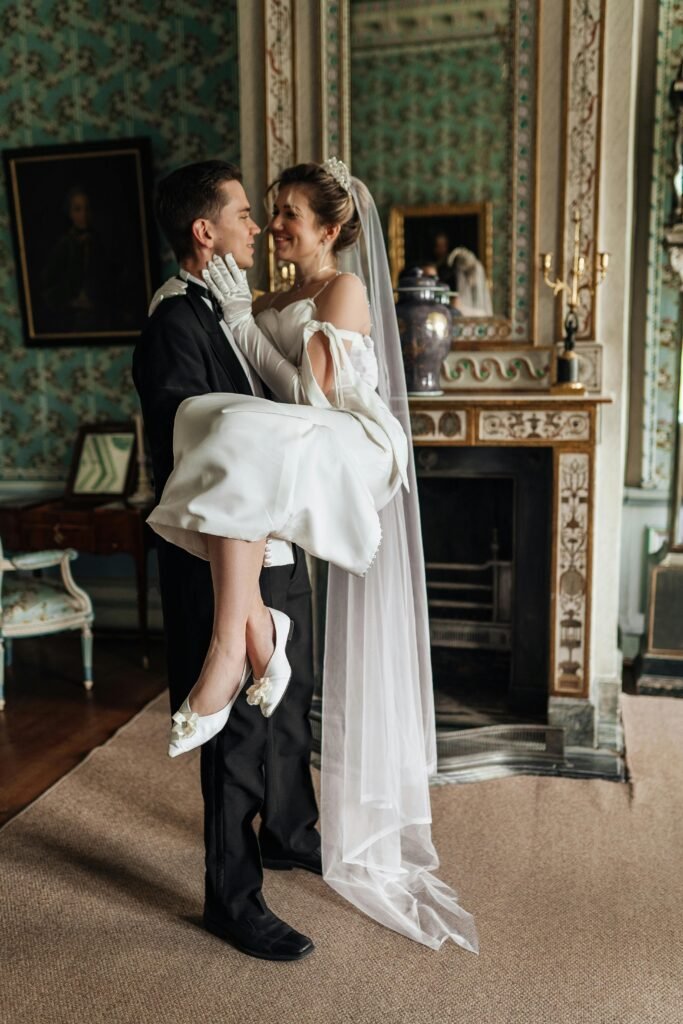
The soft, diffused light of a British overcast day produces documentary wedding portraits of remarkable consistency. No harsh shadows or bleached backgrounds. Just an even, warm quality that photographs beautifully regardless of what the sky is doing. And when the UK does deliver golden hour, from September and October in particular, when light falls at a low angle across Cotswold stone and Scottish hillside, it is genuinely extraordinary. We build our shooting days around it. Looking for a full-scale wedding photography and film team that works across the UK? Enquire with us now.
Book Your Discovery Call
How To Get Married in the UK? The Legal Process, Clearly Explained
Most planning guides oversimplify this. The GOV.UK official guidance is always your primary reference. What follows is accurate as of April 2026: but do check directly with your register office, as fees and details are updated periodically.
Getting Married in England and Wales
The legal process begins at your local register office, where both parties must give notice of intention to marry. To do this, you must have lived in that registration district for at least 7 days beforehand. If you live in different districts, you each give notice separately. The ceremony must happen at least 29 days after notice is given, and within 12 months of it. See GOV.UK: Give Notice for the current statutory fee (£42 per person as of 2025, though this varies between local authorities).
The ceremony itself. Civil ceremonies can take place at any premises approved by the local authority. From register offices, hotels and country houses to dedicated wedding venues. Open-air venues (beaches, gardens, golf courses) cannot currently be licensed for civil ceremonies in England and Wales, though the Law Commission’s 2022 recommendations proposed changing this. Religious ceremonies take place at registered places of worship. If you change your venue after giving notice, you give notice again.
Ceremony Types Available in the UK
Civil ceremony
Entirely secular, conducted by a registrar, and available at any approved venue. No religious content is permitted. This is the most flexible option for interfaith couples, non-religious couples and international couples. Though civil ceremonies must have the specific legal declarations set out in Citizens Advice: Getting Married everything else can be personalised.
Church of England
Legally binding, and follows a different notice route: banns are called on three consecutive Sundays rather than through the register office. At least one party must have a qualifying connection to the parish. The Church of England’s wedding guidance covers eligibility and process in full.
Other religious ceremonies
Registered mosques, Gurdwaras, Hindu temples and synagogues can be licensed for legal marriage. The civil notice requirements still apply unless specific residence conditions around the place of worship are met. The House of Commons Library briefing on marriage residence requirements has the detailed legal framework.
Humanist ceremonies
Legally recognised in Scotland and Northern Ireland, not yet in England and Wales, where couples typically hold a separate civil registration. The Law Commission’s 2022 report recommended extending recognition to England and Wales; this reform remains under consideration. The Humanist Society Scotland handles the process of humanist ceremonies north of the border.
Getting Married in Scotland
Scotland’s wedding law is more generous than England and Wales. Ceremonies can take place anywhere: outdoors, on a beach, in a private home, provided an authorised celebrant conducts them. Notice of marriage goes to the relevant registrar at least 29 days beforehand. For more information, see the National Records of Scotland for the current process.
Getting Married in Northern Ireland
At least 14 clear days’ notice required at the district registrar. Humanist marriages have been legally recognised since 2018. The NI Direct — Getting Married is the authoritative source to read through for further information.
A NOTE ON ACCURACY
The 29-day notice period, 7-day residency requirement and £42 statutory fee per person are verified from GOV.UK and local authority sources as of April 2026. Fees vary by authority and are updated periodically. We would highly recommend confirming this directly with your register office before booking appointments.
Getting Married in the UK for Foreigners: Visas, Documents and What You Need to Know
One thing to know upfront: you cannot legally marry in the UK on a Standard Visitor visa. The GOV.UK official guidance on marrying from outside the UK breaks it down as you can apply for 3 visas, including one on the marriage visitor visa.
Which Visa Do You Need?
Marriage Visitor Visa: For couples who want to come to the UK, marry and return home. Although there is a maximum 6-month stay, you cannot extend it or switch to another visa category from within the UK. Book your venue and ceremony before applying: you’ll need the booking confirmation.
Fiancé(e) Visa: For those marrying a UK citizen or settled person and intending to stay. The marriage must happen within the 6-month visa period. After the ceremony, you apply to extend as a spouse. Full eligibility and fees at GOV.UK Fiancé(e) Visa.
Immigration control and the 70-day extension: If either party is subject to immigration control, both must give notice together at a Designated Register Office. However, the standard 29-day notice period can be extended to 70 days while additional checks are conducted. This is routine Home Office procedure. We would advise you to check the latest guidelines directly from the source to ensure you’re up-to-date with any changes.
Documents Required
- Valid passport with the appropriate visa
- Birth certificate
- Decree absolute, dissolution certificate or death certificate of former spouse (if previously married)
- Proof of address in the registration district (accommodation booking or utility bill)
- Certified translation for any document not in English
US nationals: the US Embassy London has specific guidance. Indian nationals holding an Indian passport require a Marriage Visitor or Fiancé(e) Visa. Check current requirements for your nationality at GOV.UK’s visa eligibility tool.
Do Wedding Guests Need Visas to Attend a UK Wedding?
- EU, EEA, US, Canadian, Australian nationals: Visa-free entry for visits up to 6 months.
- Indian passport holders: UK Standard Visitor Visa required. Apply through VFS Global UK Visa Applications in India. Allow 8–10 weeks.
- UAE nationals (UAE passport): Visa-free for stays up to 6 months.
- Pakistani and Bangladeshi nationals: Standard Visitor Visa required. Apply through VFS Global.
Include visa guidance in your save the dates for any guests who need it. A wedding invitation letter and accommodation confirmation will support their application significantly.
What Does a Wedding in the UK Actually Cost?
The numbers exist. Bridebook’s 2025 UK Wedding Report, based on data from 6,800 couples, puts the average at £20,822 excluding rings and honeymoon, or around £26,500 including them. Hitched’s 2024 data sits at £23,250. London’s average is significantly higher at £37,778.
Averages, of course, only tell part of the story. A quarter of UK couples marry for £10,000 or less; others comfortably spend ten times that. What matters is where the money goes and where the hidden extras live. If you’re interested in a detailed cost breakdown, check out our blog on the topic.
The Breakdown:
|
Venue hire | £7,000–£12,000 average nationally. Exclusive-use country houses significantly higher. London commands a 40–60% premium over the national average. |
| Catering | £3,000–£10,000+. Per-head costs range from £40 (buffet) to £150+ (formal, with drinks). South Asian specialist caterers typically £80–£180 per head. |
| Photography | Average £1,482 (Bridebook 2025). Full-day documentary packages from experienced photographers: £2,000–£5,000+. Multi-day South Asian coverage: £4,000–£15,000+. |
| Wedding dress | Average £1,350 (Hitched 2024). South Asian bridal lehenga from UK boutiques: £1,500–£15,000+. |
| Flowers and décor | Average £1,271 (Bridebook 2025). South Asian mandap, stage and installation décor: £5,000–£30,000+. |
| Music and entertainment | DJ or band: £1,500–£4,000. Dhol players: £300–£800. Bhangra or Bollywood acts: £1,500–£5,000. |
| Hair and makeup |
£200–£500 for the bride. South Asian specialist MUAs: £400–£1,000+ for trial and the day. |
South Asian and Multi-Day Wedding Costs
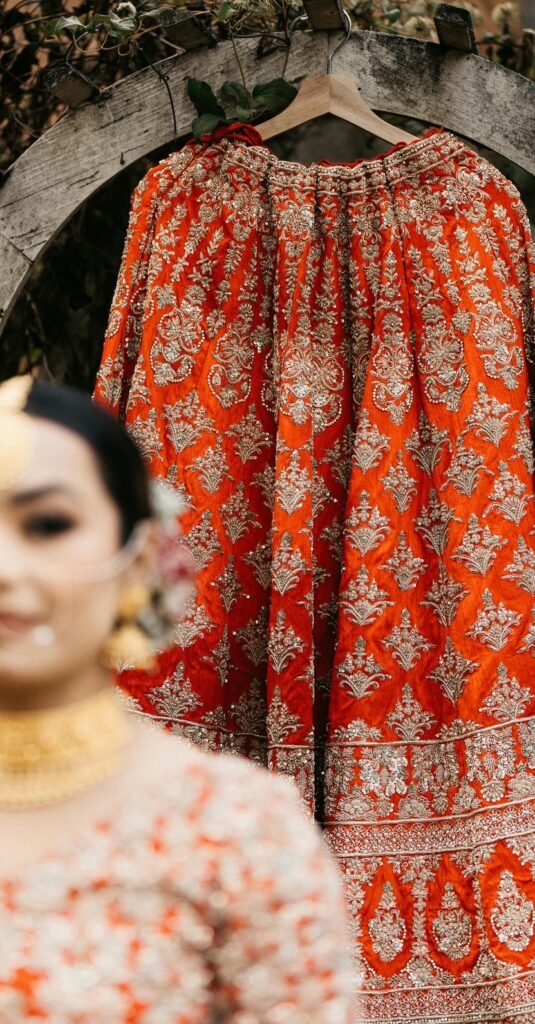
The standard UK wedding format of one day, one venue, one ceremony is not the template for most South Asian celebrations. A traditional programme spanning Mehndi, Sangeet, Baraat, Wedding and Reception across three or four days is a categorically different financial undertaking. According to Mii Asian Catering’s 2024 industry data, the average South Asian wedding in the UK costs approximately £50,000. Multi-day celebrations at exclusive-use country houses routinely reach £150,000–£400,000. The single biggest variable is the number of days and events: every additional day multiplies venue hire, catering and staffing costs.
Season and Day of Week
June is the most expensive month to marry in the UK (average £23,989); January the most affordable (£15,712), according to Bridebook’s seasonal data. Furthermore, Saturdays command the highest venue minimum spends. Booking a Thursday or Friday in October or November instead of a Saturday in June can reduce venue costs by 25–40% at most country house properties. Autumn has also been gaining steadily on summer as a preferred season, the light rewards the shift.
Where in the UK? The Best Wedding Locations by Region
The UK’s wedding landscape divides into distinct regional characters: each with its own visual identity, its own venue stock, and its own pricing reality.
London and the Home Counties
The world’s most connected city for international guests and the UK’s most expensive wedding market. Heathrow alone offers direct flights from New York (7 hours), Dubai (7 hours), Mumbai (9 hours) and Sydney (22 hours). The luxury hotel stock, from Claridge’s, The Savoy to The Dorchester and The Ritz, is world-class and deeply experienced across every cultural tradition. The Home Counties within 60–90 minutes of London (Surrey, Berkshire, Buckinghamshire, Hertfordshire, Hampshire) hold the UK’s densest concentration of exclusive-use country house venues, many of them purpose-adapted for South Asian multi-day celebrations.
The English Countryside: Cotswolds, Yorkshire, Somerset
Stone manor houses, rolling farmland, market towns that look unchanged since the Georgian period. This is the heartland of the English country house wedding: the most photographed and most internationally recognised wedding landscape in the UK. The Cotswolds in particular has become a genuine destination for international couples, with venues ranging from intimate converted barns to grand private estates with multiple function spaces and on-site accommodation for the entire wedding party.
Scotland: Castles, Highlands, and the Outdoors
Scotland’s outdoor ceremony law changes the conversation. Unlike England and Wales, where civil ceremonies must take place in a licensed building, Scotland allows weddings anywhere — cliff-top, lochside, castle grounds, open hillside — providing an authorised celebrant conducts the ceremony. That legal flexibility, combined with some of the most dramatic landscape in Europe and a growing number of luxury estate venues, makes Scotland an increasingly compelling choice for both UK and international couples. For further information, consider resources by the National Records of Scotland that handles the process.
Wales: Coastal Drama, Underrated
The Pembrokeshire coast, the Gower Peninsula and the Brecon Beacons; Wales offers some of the most visually striking scenery in the British Isles at prices significantly below equivalent English venues. The country is increasingly well-served by luxury hotel conversions and boutique estate venues, and its relative quietness in the international wedding market means availability is better than most couples expect.
The Most Iconic Wedding Venues in the UK
A curated selection across styles, scales and regions with verified capacity, seasonality and what makes each one worth the investment for a wedding in the UK.
| Venue | Capacity | Peak Season | Style / Best For |
| Blenheim Palace, Oxfordshire | Up to 800 (marquee) | Year-round; May–Sep (garden) | UNESCO palace; baroque grandeur; any scale |
| Highclere Castle, Berkshire | Up to 160 (indoor) | May–Oct | Downton Abbey setting; intimate castle character |
| Claridge’s, London | Up to 400 (Ballroom) | Year-round | Art deco luxury; all cultural traditions |
| The Savoy, London | Up to 500 (Lancaster Ballroom) | Year-round | Iconic Thames riverside; grand receptions |
| Cliveden House, Berkshire | Up to 250 | Year-round; peak May–Sep | National Trust Thames-side estate; exclusive use |
| Hedsor House, Buckinghamshire | Up to 250 | Year-round | South Asian specialist; Georgian estate near London |
| Froyle Park, Hampshire | Up to 300 (Ballroom) | Year-round | UK’s leading South Asian dry-hire estate |
| Chatsworth House, Derbyshire | Up to 250 (Orangery) | Apr–Oct | Peak District stately home; UNESCO gardens |
| Gleneagles, Perthshire | Up to 500 | Year-round | Scottish Highlands luxury resort; outdoor ceremonies |
| Euridge Manor, Wiltshire | Up to 150 (exclusive) | Year-round |
Cotswolds weekend buyout; intimate |
Blenheim Palace: Woodstock, Oxfordshire
Blenheim Palace is the most palatially grand wedding venue in England. It is a UNESCO World Heritage Site and the birthplace of Winston Churchill. In terms of capacity, the Orangery seats 150–200, the Long Library and Great Hall offer different scales and the South Lawn accommodates marquee receptions for up to 800 guests. Photography is available exclusively for couples marrying at the palace. Peak season for outdoor events: April–October. Note: full estate exclusive hire is not available, but event spaces are entirely private.
Highclere Castle: Burghclere, Berkshire
Highclere Castle: filming location for Downton Abbey, set in 1,000 acres of Capability Brown parkland. Indoor capacity up to 160; marquee on the grounds scales larger. Peak season is between May–October. The castle’s character suits couples who want genuine historic intimacy rather than a hotel. Exclusive hire available; limited on-site accommodation means nearby properties are needed for guest stays.
Claridge’s: Mayfair, London
Claridge’s is where art deco glamour meets wedding day perfection. The Ballroom accommodates up to 400 guests; the French Salon is an intimate 20–60-person alternative. One of London’s most experienced venues for South Asian and multicultural celebrations, the team works confidently across Hindu, Sikh, Muslim and Jewish traditions.
The Savoy: Strand, London
The Savoy has hosted some of Britain’s most celebrated weddings since the 19th century. The Lancaster Ballroom accommodates up to 500 guests; the river-facing rooms offer an unmatched Thames backdrop. The combination of history and contemporary service is, by any standard, extraordinary.
Cliveden House: Taplow, Berkshire
Cliveden House is a Thames-side National Trust estate managed as a luxury hotel: full exclusive hire, up to 250 seated. The Spring Garden in April is among the most beautiful ceremony backdrops in the country. Peak season is from May–September, though the estate works beautifully in winter with open fires and candlelight.
Hedsor House: Bourne End, Buckinghamshire
Hedsor House is a Georgian country estate 30 minutes from London with a specialist reputation for South Asian and multicultural weddings. Capacity up to 250; full exclusive hire; on-site accommodation for approximately 50 guests. The driveway accommodates baraat processions with horses; the Centre Hall is mandap-ready with ceremonial fire approval. Peak season is from May–October.
Froyle Park: Hampshire
Froyle Park is the UK’s leading dedicated South Asian dry-hire estate outside London, named Wedding Venue of the Year at the British Asian Wedding Awards 2025 and Best Historic Wedding Venue (South Central) at The Wedding Industry Awards 2025. The Jacobean estate accommodates up to 300 guests indoors or 240 under the outdoor Dome. Mandap approval, ceremonial fire permission, full flexibility for South Asian caterers are available. On-site accommodation for 66 guests. Dry hire rates are roughly from £9,500–£16,500 (2025–2026).
Chatsworth House: Bakewell, Derbyshire
Chatsworth House: the Palace of the Peaks, home to the Cavendish family for over 16 generations. The Orangery seats up to 250; the Cavendish Rooms up to 120. Peak season from April–October. The quality of the gardens and the scale of the architecture produce some of the finest wedding photography in the country.
Gleneagles: Auchterarder, Perthshire
Gleneagles is Scotland’s most celebrated luxury resort wedding venue: set in the Perthshire hills with 232 rooms and suites, extraordinary indoor event spaces, and outdoor ceremony capability under Scotland’s permissive marriage law. Up to 500 for large celebrations. Year-round; the landscape in autumn and winter is as compelling as summer. Experienced with South Asian multi-day programmes.
South Asian and Multicultural Weddings in the UK
Few things have changed the UK wedding industry as profoundly as the South Asian celebration. Over decades, British-Indian, British-Pakistani, British-Bangladeshi and British-Sri Lankan families have built an entire specialist ecosystem, caterers who understand regional cuisine at scale, decorators who handle mandap installations the size of small stages, dhol players and baraat horse companies and Bollywood DJs — that makes the UK one of the world’s most capable countries for a Hindu, Sikh, Muslim or multicultural wedding outside the subcontinent itself.
Why the UK Works
The country house estate is the UK’s defining wedding venue format and it maps almost perfectly onto the requirements of a multi-day South Asian celebration. There are private grounds for outdoor ceremonies, multiple indoor spaces for different functions and on-site accommodation for the wedding party. Further, no noise ordinance that ends the sangeet at 10pm. Catering flexibility means your specialist team can come in and cook what your family actually eats. The venues exist; they’ve been adapting to this community for years.
The photography opportunity is worth naming specifically. A baraat arriving at a Georgian country house, the dhol echoing across parkland that hasn’t changed in two centuries. A Hindu pheras ceremony in an Elizabethan hall at golden hour. The visual juxtaposition of South Asian bridal colour against British heritage stone is not a compromise, it’s a genuinely distinctive aesthetic that produces images unlike those from any other country.
The Best UK Venues for South Asian Weddings
London and immediate surrounds. The hotel ballrooms with the infrastructure for large mandap ceremonies include Grosvenor House on Park Lane (250–450 guests), The Landmark London (up to 400), Sofitel London Heathrow (300–600+, convenient for international guests) and Fairmont Windsor Park (300–500). Shiv Gopal Events’ Indian Wedding Venue Guide has a comprehensive London-area breakdown for more in-depth research.
Exclusive-use country estates. For the multi-day format with full catering flexibility:
- Froyle Park, Hampshire: 300 guests; dry hire; mandap and ceremonial fire approved; 1 hour from London. British Asian Wedding Awards Venue of the Year 2025.
- Hedsor House, Buckinghamshire: 250 guests; baraat-friendly driveway; mandap and fire approved; 30 minutes from London.
- Oakley Hall Hotel, Hampshire: 350 guests; 50 bedrooms on site; dry hire £9,500–£16,500 (2026); mandap indoor and outdoor.
Ceremony Types for South Asian Couples
- Hindu ceremony: Legal recognition requires either a registered Hindu temple or a separate civil ceremony. Symbolic mandap ceremonies at country house venues are widely practised and couples marry legally at a register office beforehand or on the same day.
- Sikh Anand Karaj: Legally recognised in registered Gurdwaras. Many Sikh couples hold the Anand Karaj at the Gurdwara and the reception at a country house or hotel.
- Muslim Nikah: Recognised legally only when conducted at a registered mosque or by a registrar. Civil registration alongside a separate Nikah is the most common format.
- Civil + cultural celebration: The most flexible route for multicultural and diaspora couples, a civil ceremony at a licensed venue, followed by the full cultural programme.
For detailed guidance on religious marriage recognition in the UK, Citizens Advice has the clearest breakdown.
The Multi-Day Programme
A traditional UK South Asian wedding typically spans two to four days. Not every family includes every event, but the arc tends to cover:
- Mehndi: Henna ceremony, typically the evening before the wedding. Intimate; usually at a family home or smaller venue.
- Sangeet: Music and dance celebration. Often combined with Mehndi or held separately. DJ, live music, family performances. Most country house venues handle this format well.
- Baraat: The groom’s procession on horseback or by car, with dhol players and dancing family. This requires venue access confirmation for horses at the entrance.
- Ceremony: The Pheras, Anand Karaj, or Nikah. For Hindu ceremonies, mandap installation and ceremonial fire approval must be confirmed with the venue explicitly and in writing.
- Reception: Dinner, speeches, dancing. Most UK country house venues permit DJ music until midnight; some allow later.
IN THE FABLE CAMERAWORKS
We specialise in full-service documentary and editorial wedding media production for South Asian and multicultural celebrations across the UK. From Sikh Anand Karaj ceremonies at Scottish estates, multi-day Hindu weddings at Hampshire country houses to mixed-heritage civil ceremonies at London luxury hotels. Our work is narrative-driven: we’re not there to document a checklist, we’re there to find the story your celebration is telling. If that approach speaks to what you want from your wedding photography and film, we’d love to hear from you.
Wedding Photographers in the UK: What to Look For
The UK has produced some of the finest wedding photographers working anywhere in the world, a tradition rooted in the editorial photography culture of publications like Vogue, The Times and the Sunday broadsheets. The best of them are story-tellers first, technicians second.
What to Ask Before You Book For Your Wedding in the UK:
- Cultural experience: For South Asian and multicultural weddings, ask to see portfolio work from ceremonies that match yours. A Sikh Anand Karaj requires completely different preparation; technical, logistical and intuitive in comparison to a church wedding. The ISPWP and Fearless Photographers are reliable quality benchmarks.
- Multi-day coverage: Ask how the photographer structures three or four consecutive days, how they maintain narrative continuity and physical energy across a programme that begins with a Mehndi on Thursday evening and ends with a reception on Saturday night.
- Second photographer: For weddings over 150 guests, or any multi-location event, a second photographer is essential. Confirm whether they’re included in the package or an additional cost.
- Videography: Booking photography and film from the same production company, as we offer at In The Fable Cameraworks, removes the logistical friction of two separate teams and ensures the two deliverables tell the same story in an aligned fashion.
- Delivery timeline: The average professional delivery is 6–12 weeks. Confirm it explicitly.
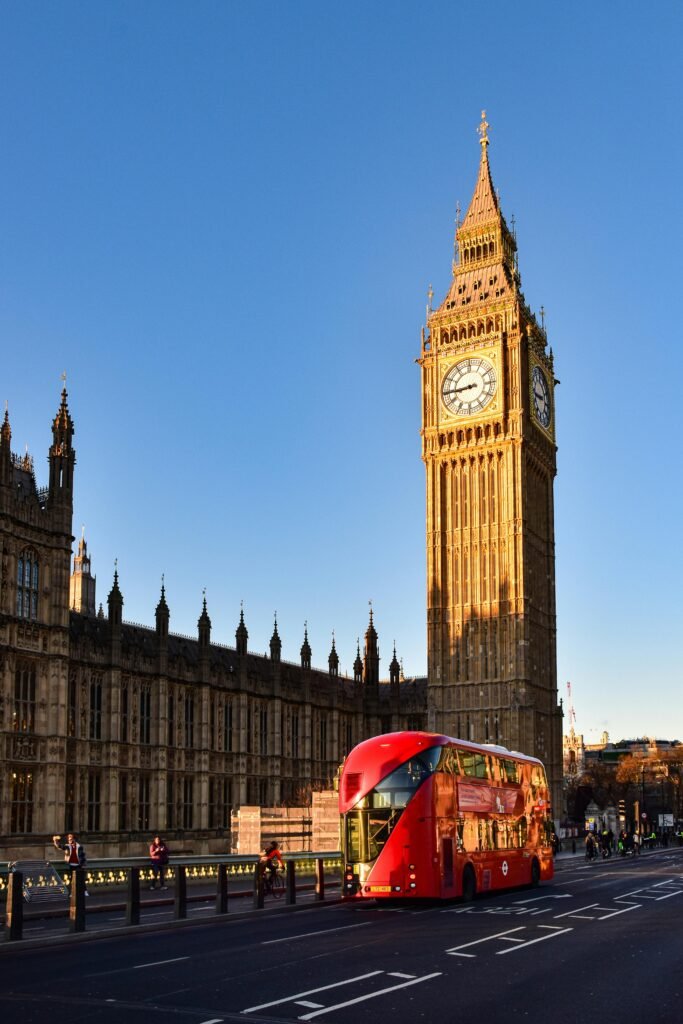
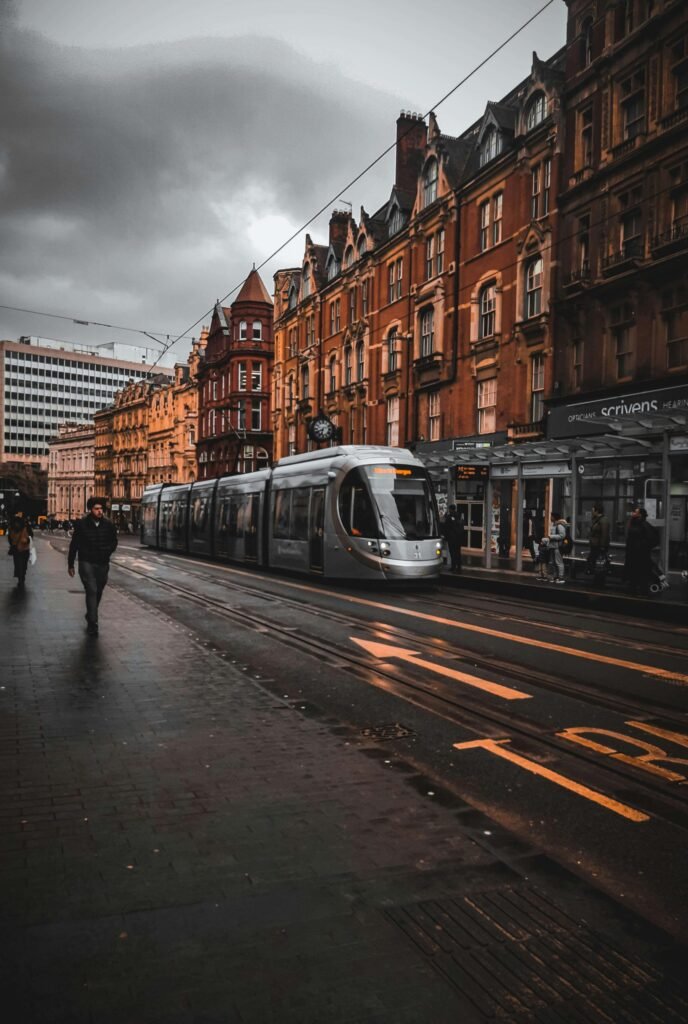
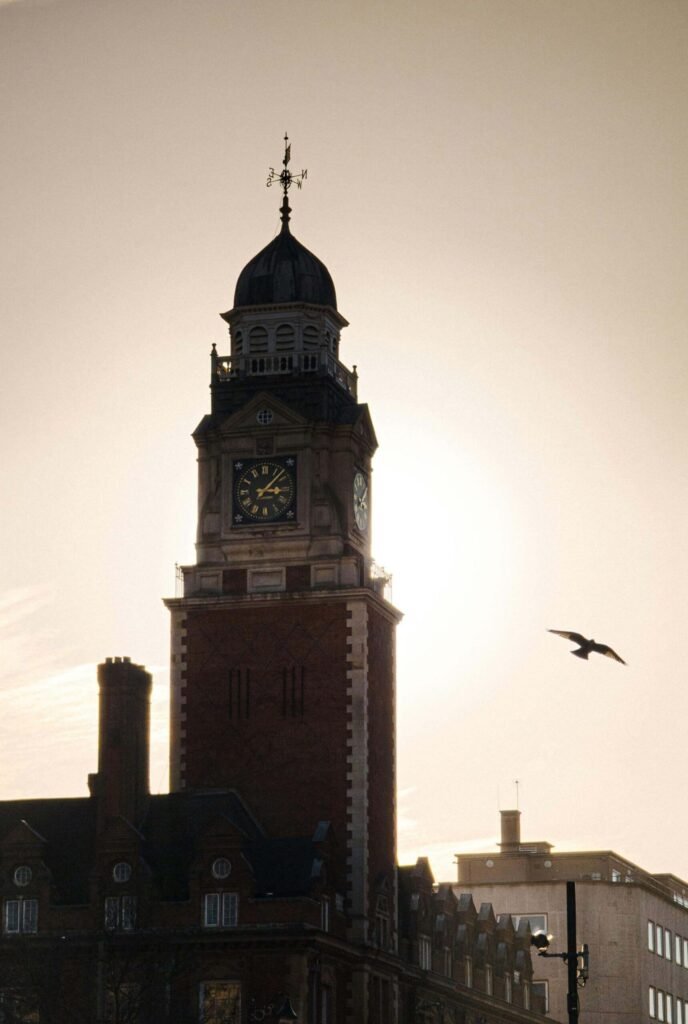
Explore Our Wedding Photography & Film Guides By Location
The Right Planning Timeline for a UK Wedding
UK venue availability at country house estates for peak season (May–September) Saturday dates has tightened considerably since 2022. The most sought-after properties are now confirming bookings 18 months or more in advance.
- 18–24 months out: Set your vision, agree the budget, shortlist venue types. If you want an exclusive-use South Asian venue in summer, start conversations now.
- 12–18 months: Book the venue — this anchors everything else. Book your photography and film team. Experienced teams have the same availability curve as sought-after venues.
- 12 months: Give notice at the register office (you can do this up to 12 months ahead). Begin visa applications for international guests requiring UK entry clearance.
- 9–12 months: Confirm caterer, florist, entertainment. For South Asian weddings: secure specialist caterers and décor company now. Send save the dates internationally with visa guidance.
- 6–9 months: Send formal invitations. Finalise ceremony programme. South Asian couples: confirm pandit, mehndi artist, dhol players and baraat arrangements.
- 3–6 months: Outfit fittings. Hair and makeup trials. Menu tasting. Share your photography and film brief with your production team.
- Week before: Arrive and settle in. Venue walk-through. Welcome dinner or drinks for outstation and international guests. The celebration starts here.
International Guests Travelling to a UK Wedding
Getting Here
Heathrow is one of the world’s most connected airports. Direct services from New York (7 hours), Dubai (7 hours), Mumbai (9 hours), Delhi (9 hours), Sydney (22 hours) and Toronto (8 hours) make it internationally feasible as a destination. Gatwick, Manchester, Edinburgh and Birmingham serve major international routes. VisitBritain’s travel guide covers current entry requirements and transport options in detail for figuring out the routes.
Getting Around
The UK’s rail network is fast and reliable. Heathrow to central London takes 15 minutes on the Heathrow Express. Edinburgh is 4.5 hours from London; Manchester 2 hours; Birmingham 1.5 hours. For country house venues, private coaches are strongly recommended, rural properties typically have limited parking and no public transport. Budget for coach transfers as a guest experience essential, not an optional extra.
Accommodation
For venues with on-site accommodation, block-booking rooms for the wedding party is standard. For remaining guests, identify the nearest hotels and B&Bs and include recommendations in your invitation packs. Many venues have preferred accommodation partner lists. Request these early and share them with the save the dates.
Planning a Wedding in the UK? Let’s Tell Your Story.
There is a particular quality to a UK wedding done well. The soft light on stone. A baraat turning into a Hampshire driveway with the dhol carrying across open parkland. Pheras in an Elizabethan hall while the afternoon light falls through lead-paned windows. The country rewards couples who choose it with something that no other European destination quite replicates, a depth of place that becomes part of the photographs, the film, and the memory.
At In The Fable Cameraworks, we make documentary-style, editorially-led wedding photography and film for South Asian, multicultural and international weddings. Our work is narrative-first: we’re looking for your story, not a template. If you are planning a wedding in the UK and want media production that reflects what the day means to your family, we’d love to hear from you.
Frequently Asked Questions (FAQs): Wedding in the UK
- How Do You Get Legally Married in the UK?Give notice at your local register office (minimum 7 days' residency in that district beforehand). The ceremony takes place at least 29 days after notice, at any licensed venue. Church of England weddings follow the banns process instead.
- What is the average cost of a wedding in the UK?£20,822 on average excluding rings and honeymoon, per Bridebook's 2025 report. Hitched puts 2024 at £23,250. London averages £37,778. South Asian multi-day weddings average £50,000+ according to industry data.
- Can foreigners get married in the UK?Yes — with the right visa. Not on a Standard Visitor visa. A Marriage Visitor Visa or Fiancé(e) Visa is required, depending on whether you intend to stay. GOV.UK has the authoritative guidance. US nationals should also check with the US Embassy London.
- What is the best time of year for a wedding in the UK?June is peak season and the most expensive. September and October offer exceptional light, cooler temperatures and lower venue costs. January is the most affordable. Autumn has been gaining steadily as a preferred season as couples discover what UK light actually looks like in October.
- Which UK venues work for South Asian weddings?Froyle Park (Hampshire), Hedsor House (Buckinghamshire), Oakley Hall (Hampshire), Grosvenor House (London), The Dorchester (London), and Fairmont Windsor Park lead the dedicated South Asian venue market.
- Are humanist marriages legal in the UK?In Scotland and Northern Ireland, yes. In England and Wales, not yet, though the Law Commission's 2022 recommendations proposed extending legal recognition. Reform is pending. Couples in England and Wales wanting a humanist ceremony typically hold a separate civil registration.