


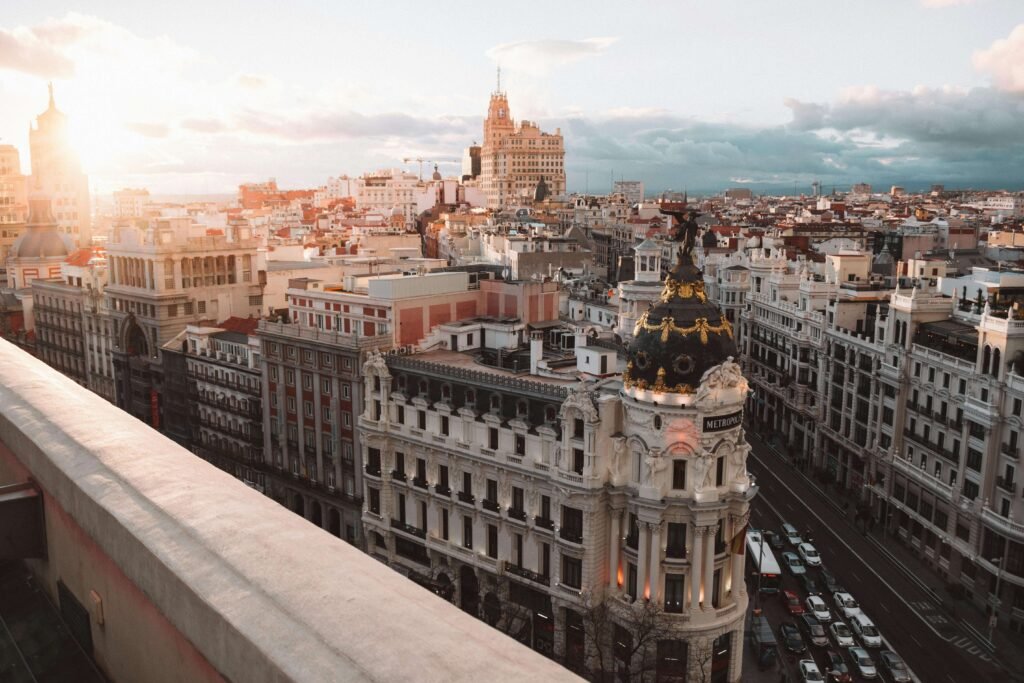
Destination Wedding in Spain: At a Glance
What is the best region for a destination wedding in Spain?
It depends on your vision. Mallorca leads for limestone finca luxury and Mediterranean intimacy. Andalusia — Seville, Ronda, Marbella — for hacienda grandeur and Moorish heritage. Barcelona and Catalonia for architecture and cosmopolitan energy. Ibiza for beach club glamour. Each region has its own distinct character, light quality and venue type.
How much does a wedding in Spain cost?
Wedding in Spain cost ranges from approximately €25,000 for a small intimate ceremony to €400,000 and above for a large luxury celebration. A typical mid-scale destination wedding in Spain for 100–150 guests runs €70,000–€150,000 all-in. The main cost drivers are venue hire, catering per head and décor.
Can foreigners legally get married in Spain?
Yes, but with conditions. At least one party typically needs to be a Spanish resident or citizen for a civil marriage at the Registro Civil. Most international couples choose to marry legally at home and hold a symbolic ceremony in Spain, completely valid and by far the most common route. Catholic ceremonies are legally recognised.
What is the best time of year for a destination wedding in Spain?
Late April through June and mid-September through October are the sweet spots. Summers are beautiful in coastal regions but Andalusia in July can reach 40°C; not ideal for outdoor ceremonies. September and October offer golden light, harvest season charm, warm sea temperatures and fewer crowds. Winter is viable in the Canaries and parts of Andalusia.
Is Spain a good destination for an Indian or South Asian wedding?
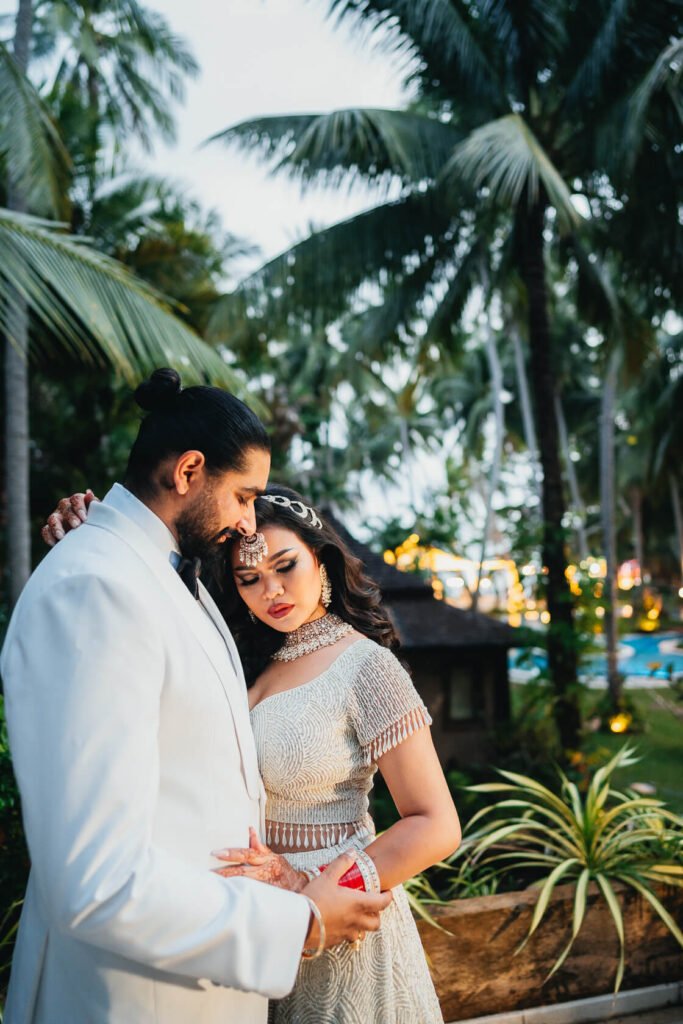
Absolutely. Spain’s outdoor-capable venues from Mallorcan fincas, Andalusian haciendas to Ibiza villas accommodate mandap installations and multi-day celebration formats well. The climate is reliable, flight connections from the UK, UAE and India are excellent, and the visual contrast of Indian bridal colour against Spanish terracotta and whitewash is extraordinary to photograph and film.
Spain does something to people. It arrives through warmth; the particular quality of Andalusian late-afternoon light, the sound of a guitar drifting across a courtyard, the smell of orange blossom on a Seville evening. There is a generosity to Spanish celebration culture that makes a destination wedding here feel less like a logistical achievement and more like a genuinely lived experience.
Spain is also, practically speaking, one of the most compelling destinations in Europe for an international wedding. It has more geographic and aesthetic diversity than almost any comparable country; the limestone fincas of Mallorca, the Moorish palace architecture of Andalusia, the modernist grandeur of Barcelona, the volcanic drama of the Canaries — all within the borders of a single, well-connected country. Whether your vision is intimate and coastal, grand and palatial, or something genuinely distinctive, Spain delivers.
At In The Fable Cameraworks, we are a full-service wedding media production company specialising in documentary-style, editorial-leaning photography and film for Indian, multicultural and South Asian weddings across Europe and South Asia.
We have worked across Spain’s regions — from Mallorca’s countryside fincas to Barcelona’s architectural landmarks — and what we find consistently is that Spain rewards good photography. The light here is extraordinary and the settings never let you down.
We cover weddings across Spain with a narrative-driven, creative direction-focused approach that is built around your story, not a template. Some of our favourite destinations, where we work with a mix of local and international team, are Barcelona, Mallorca, Andalusia, Ibiza, Marbella, Costa Blanca, Valencia and more.
This is the definitive guide to planning a destination wedding in Spain — covering everything from choosing your region and understanding the legal process, to managing guest logistics from the UK, India and the UAE, and making the most of what Spain offers for Indian and multicultural celebrations.
Why Do So Many Couples Choose a Destination Wedding in Spain?
Before we get into the details, it is worth asking the question that most planning guides skip: why Spain specifically? What Makes Spain Different From Other European Wedding Destinations?
Spain’s single greatest advantage as a destination wedding location is its diversity. Italy has a strong visual identity — the stone, the olive trees, the palazzi. Greece has the white walls and blue water. Spain contains all of those aesthetics and several more: the Moorish architecture of Andalusia, the raw limestone of the Balearic Islands, the urban modernism of Barcelona, the Atlantic drama of the Basque Country. As Spain’s official tourism portal notes, the country spans 17 autonomous regions each with its own distinct landscape, culture and character; a diversity that makes it one of the most versatile wedding destinations in Europe.
Spain also has an easy answer to the most common objection: the food. Spanish gastronomy — from Basque pintxos to Andalusian seafood, from Catalan creative cuisine to Mallorcan lamb — is world-class, and it translates beautifully to a wedding setting. A tapas-style reception, a paella station at a finca, jamón ibérico carved table-side: these are not catering compromises, they are experiences guests genuinely remember.
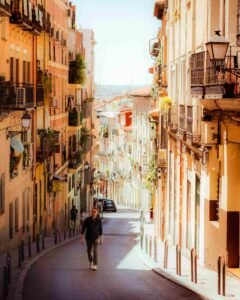
How Does Spain Compare to Italy or Greece for a Destination Wedding?
Italy wins on palatial grandeur and the depth of its heritage hotel stock. Greece wins on island intimacy and the clarity of its light. Spain wins on diversity of setting, food culture, venue flexibility, and (at most location) value for money. According to Elite Traveler magazine, Spain’s destination wedding market has grown significantly in the past decade precisely because it offers a combination of world-class hospitality, extraordinary venues and guaranteed sunshine that other European destinations struggle to match simultaneously.
For Indian and South Asian couples specifically, Spain has a practical advantage over Italy and Greece: its Mallorcan fincas and Andalusian haciendas offer the outdoor space, accommodation volume and operational flexibility that a multi-day Indian wedding requires — at price points that are often more accessible than equivalent Italian venues.
Is the Photography and Film Opportunity in Spain Genuinely Exceptional?
From our perspective as documentary and editorial wedding filmmakers: yes, consistently and for specific reasons. Spanish light, particularly in September and October, has a warmth and directness that produces extraordinary images. The golden hour in Andalusia can last over an hour in autumn, and the light that falls across limestone finca walls, white-washed hacienda courtyards and Mallorcan olive groves in that window is unlike anything available in northern Europe. The visual contrast of Indian bridal colour against terracotta and whitewash is something we have shot repeatedly and it never stops being extraordinary.
What Are the Best Regions for a Destination Wedding in Spain?
Spain’s seventeen autonomous regions each offer a completely different wedding experience. Here are the ones that matter most for destination celebrations, with honest guidance on who each suits best. Each region links to our published photography and venue guides where available.
Mallorca: The Right Choice for Your Destination Wedding?
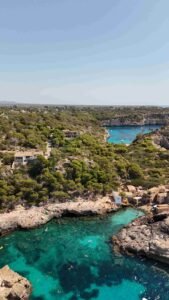
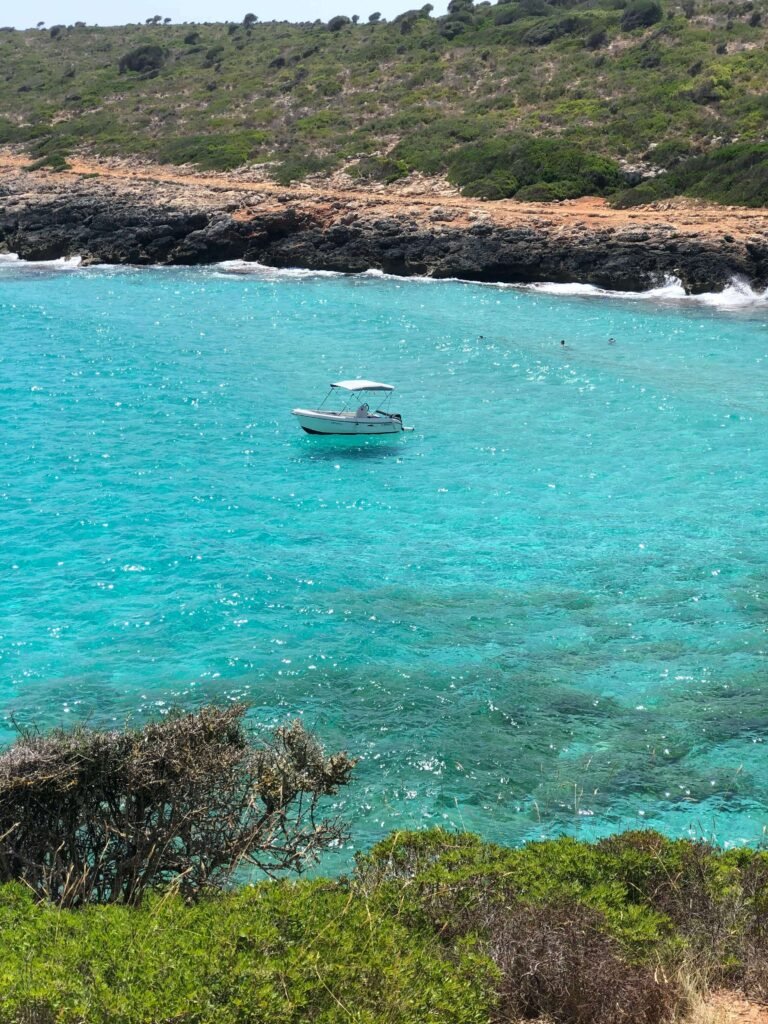
Mallorca is Spain’s most established and most requested destination wedding island, and for good reason. The combination of limestone finca architecture, turquoise Mediterranean coves, the UNESCO-listed Serra de Tramuntana mountain range as a backdrop and a mature professional wedding industry makes it the most reliable all-round choice for a destination wedding in Spain.
The Illes Balears official tourism site describes Mallorca as an island of extraordinary natural and architectural diversity and from a photography standpoint, we would agree entirely.
The finca, the traditional Mallorcan farmhouse estate, is the defining venue type here. Centuries-old stone buildings, olive and almond groves, private swimming pools, on-site guest accommodation.
Most fincas offer full exclusive hire, which gives you complete creative control over the event. June and September are the peak months; late October offers extraordinary light with fewer guests.
- Best for: 60–250 guests, finca aesthetic, couples prioritising natural beauty over urban energy, South Asian and multicultural multi-day celebrations. Lonely Planet’s Mallorca guide is a useful starting point for understanding the island’s geography before shortlisting venues.
- Peak season: May – October. September and October are the photography sweet spot.
Why Is Andalusia One of the Most Iconic Wedding Destinations in Spain?
Andalusia is Spain’s most distinctly Spanish region; the birthplace of flamenco, the home of Moorish architecture, the land of sherry and olive oil and late-night dinners that begin at 10pm. It is also, for a destination wedding in Spain that wants maximum visual drama and cultural depth, the most compelling mainland option. The official Andalusia tourism portal describes a region of extraordinary contrast: whitewashed pueblos, Moorish palaces, Atlantic beaches and UNESCO-listed heritage sites.
The hacienda is Andalusia’s wedding venue equivalent of the Mallorcan finca: private estates of genuine antiquity, often surrounded by olive groves or vineyards, with tiled courtyards, fountains and architecture that has accumulated character over centuries. Seville’s surroundings (the Aljarafe countryside, the Guadalquivir valley) are particularly rich in them. Ronda — the cliff-top town in the Ronda mountains — offers a more dramatic, less tourist-heavy alternative. Marbella and the Costa del Sol bring a more contemporary luxury angle.
Best for: 80–350 guests, hacienda and palace aesthetic, couples wanting distinctly Spanish character, Indian weddings requiring outdoor ceremony space and large estate grounds.
Peak season: April – June and September – November. Avoid July–August outdoors in Seville (regularly 38–42°C).
What Does Barcelona and Catalonia Offer for a Destination Wedding in Spain?
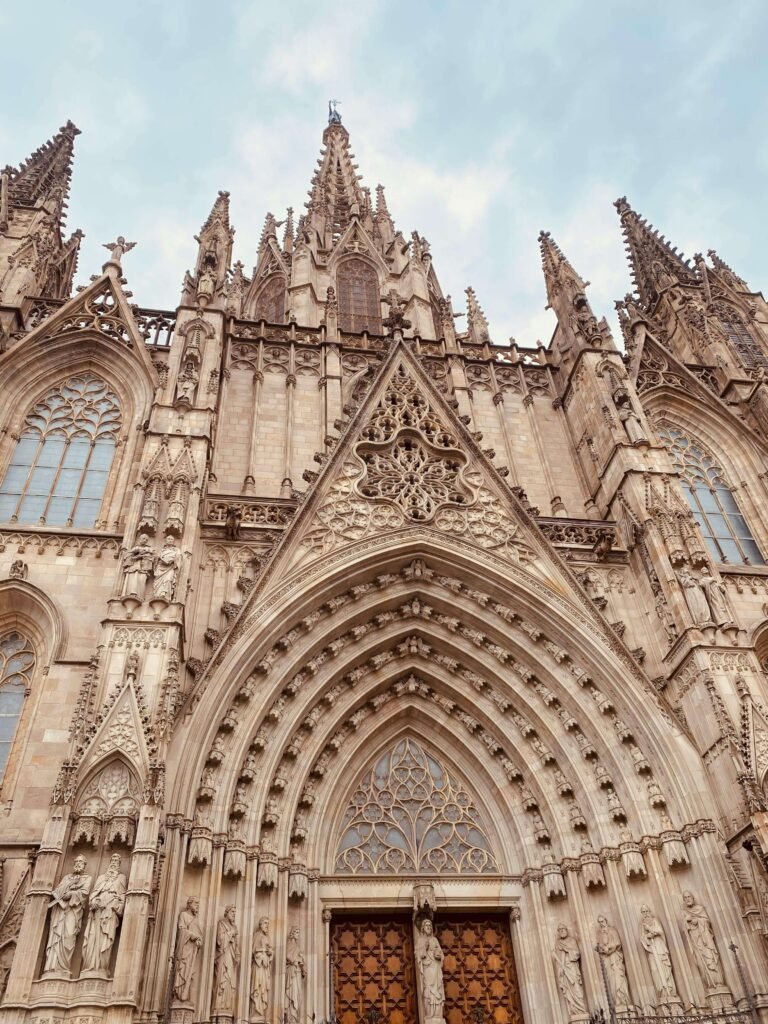
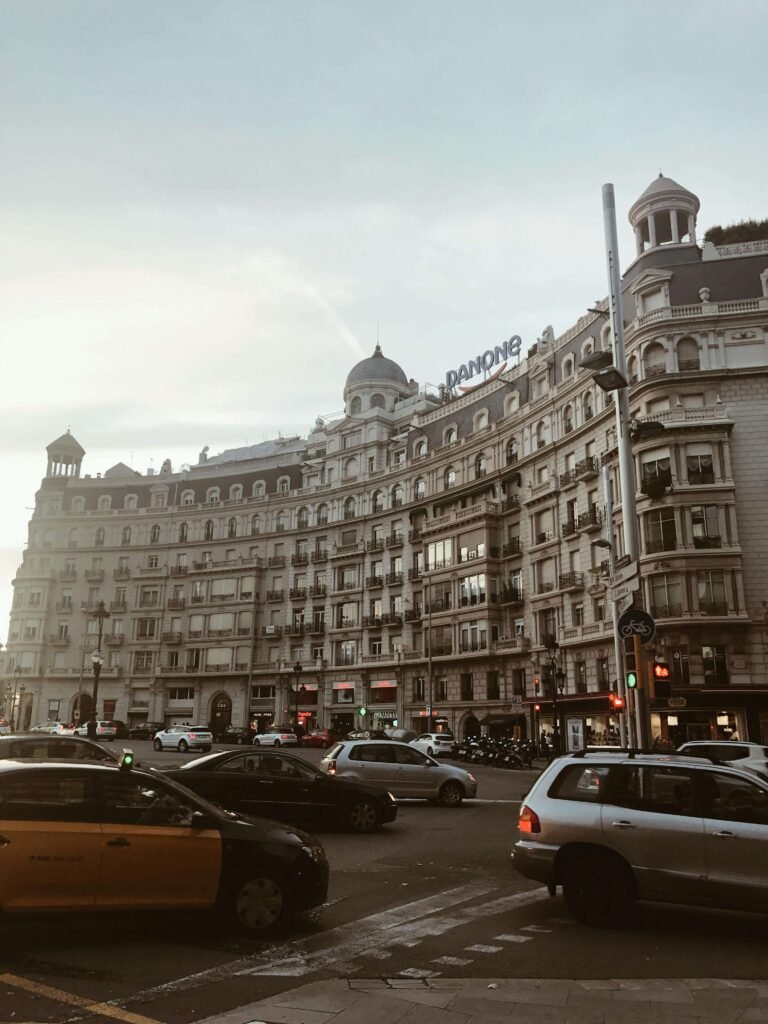
Barcelona is the most cosmopolitan and architecturally distinctive wedding city in Spain. Gaudí’s Modernista landmarks — the Sagrada Família, Park Güell, Casa Batlló — provide a visual context genuinely unlike anywhere else in Europe, and the city’s contemporary design culture means venues and vendors are consistently at the cutting edge.
The Costa Brava, north of the city, adds a coastal dimension: dramatic rocky coves, medieval villages and cliff-top venues above turquoise water.
The masía, the traditional Catalan country house, plays the same role in Catalonia that the finca does in Mallorca: private estate, stone architecture, vineyard or olive grove setting, full exclusive hire.
Moreover, the Penedès wine region south of Barcelona adds an exceptional vineyard wedding category: for couples who want a city wedding combined with countryside accessibility, Barcelona is the strongest option in Spain.
- Best for: 80–300 guests, urban-contemporary or vineyard aesthetic, city-first couples, guests who want a Barcelona cultural experience alongside the wedding.
- Peak season: May – June and September – October. Costa Brava suits April–October.
What Makes Ibiza a Unique Destination Wedding Location?
Ibiza has shed its party island reputation and emerged as one of Europe’s most genuinely distinctive luxury wedding destinations. The interior of the island — pine-forested hills, whitewashed casas, ancient Moorish watchtowers — is a world away from the club scene, and the villa estates available for private hire there are extraordinary.
The coastal setting combines cliff-top drama with turquoise water in a way that photographs unlike anywhere else in Spain.
Ibiza suits couples who want their destination wedding in Spain to feel genuinely unlike any other they have attended. The scale tends toward the intimate (50–150 guests), and the aesthetic — natural materials, organic florals, sunset timings — leans relaxed luxury. Summer is peak season; June and September offer the best balance of weather and availability.
- Best for: 40–200 guests, villa and coastal aesthetic, couples prioritising uniqueness and editorial photography, mixed-heritage and contemporary celebrations.
- Peak season: June – September. Early October still beautiful with fewer crowds.
Is Valencia or the Basque Country Worth Considering?
Valencia is Spain’s most underrated wedding destination. The city’s extraordinary contemporary architecture, the City of Arts and Sciences by Santiago Calatrava; combined with the warmth of Valencian food culture (this is where paella comes from) and a rapidly growing luxury hotel stock makes it a genuinely compelling alternative to the obvious choices.
The Costa Blanca south of the city adds a coastal option with lower competition.
The Basque Country, San Sebastián in particular, offers Spain’s finest food culture in a dramatically beautiful Atlantic coastal setting. It is cooler and wetter than the Mediterranean, which makes it genuinely suited to spring and early summer weddings rather than high summer.
For couples who want the very best food and wine experience and are willing to trade Andalusian sunshine for Basque culinary excellence, it is extraordinary.
Spain Wedding Destinations at a Glance
| Region | Vibe | Best For | Peak Season |
| Mallorca | Limestone finca luxury | 50–250 guests, multi-day | May – Oct (Sept best) |
| Andalusia | Moorish hacienda grandeur | 80–350 guests, Indian weddings | Apr – Jun, Sept – Nov |
| Barcelona / Catalonia | Urban & vineyard | City lovers, 80–300 guests | May – Jun, Sept – Oct |
| Ibiza | Coastal villa glamour | Intimate, 40–200 guests | Jun – Sept |
| Valencia | Modern & culinary | City couples, 80–250 guests | Apr – Jun, Sept – Oct |
| Basque Country | Atlantic drama & food | Discerning couples, 50–150 | Apr – Jun |
What Are the Most Iconic Wedding Venues in Spain?
Spain’s venue landscape is vast. To help you navigate it, here are ten of the most celebrated and photographically extraordinary wedding venues across the country’s key regions spanning haciendas, island fincas, cliff-top villas and heritage palaces.
1. Finca Cortesin: Casares, Andalusia

Finca Cortesin is widely considered the finest luxury resort wedding venue in Andalusia. Set on a 215-hectare estate between Marbella and Sotogrande, with sweeping views to the Mediterranean and Gibraltar, its gardens, pavilions and private villas accommodate celebrations from intimate to 500+ guests. The architectural detail and landscaping are immaculate. For a destination wedding in Spain at the ultra-luxury end of the Andalusian market, this is the benchmark.
2. Hacienda de San Rafael: Las Cabezas de San Juan, Seville
Hacienda de San Rafael is a restored 18th-century olive estate outside Seville, widely regarded as one of the most romantic hacienda venues in Spain. The whitewashed courtyards, ancient olive trees, private accommodation across casitas and villas, and the extraordinary culinary team make it exceptional for celebrations of 20–120 guests. It is intimate by hacienda standards and deliberately so an antidote to the grand hotel.
3. Son Brull Hotel & Spa: Pollença, Mallorca
Son Brull is a converted 18th-century Jesuit monastery set in the foothills of the Tramuntana mountains. The combination of original stonework, manicured gardens and views over the Pollença valley produces a setting that is simultaneously ancient and refined. Exclusive hire available; up to 150 guests. One of our favourite venues to photograph in Mallorca, the light here in the afternoon is extraordinary.
4. Can Simoneta: Canyamel, Mallorca
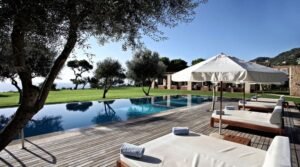
Image Courtesy of Can Simoneta
Can Simoneta sits on a cliff overlooking the crystal-clear waters of the Canyamel bay on Mallorca’s east coast. The combination of sea views, stone architecture and the particular quality of the eastern Mallorca light makes it genuinely distinctive; more coastal, more intimate and more editorial in its visual character than the finca estates of the interior. Suits 30–130 guests.
5. Belmond La Residencia: Deià, Mallorca – One of the best venues for a destination wedding in Spain
Belmond La Residencia is a Belmond property set in twin 16th-century manor houses surrounded by olive and citrus trees in the village of Deià. The UNESCO-listed Tramuntana mountains rise directly behind it. It is intimate, extraordinarily beautiful, and the catering and service are at the level you would expect from the Belmond group. One of the most celebrated wedding hotels in Mallorca.
6. Hacienda Na Xamena: Sant Miquel, Ibiza
Hacienda Na Xamena is Ibiza’s most dramatic hotel, suspended on a cliff 180 metres above the sea on the island’s wild north coast. The views, the hanging gardens, the sense of isolation are unlike anywhere else on the island. For a destination wedding in Spain that wants true drama, this is a serious candidate. Intimate scale (up to 80 guests for ceremonies), but the setting is unforgettable.
7. Anantara Villa Padierna Palace: Benahavís, Marbella
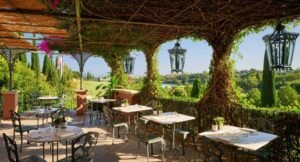
Image Courtesy of Anantara Villa Padierna Palace
Villa Padierna Palace offers what is arguably the most palatial wedding setting on the Costa del Sol. The Andalusian-Tuscan architecture, a Roman amphitheatre that seats 300, manicured gardens and the backdrop of the mountains above Marbella combine to make it extraordinary for large-scale celebrations. Strong infrastructure for Indian and multicultural weddings of 200+ guests.
8. Parador de Carmona: Carmona, Seville
Parador de Carmona is a 14th-century Moorish palace converted into a Parador, Spain’s network of state-owned heritage hotels. Positioned on a hill above the town of Carmona with views across the Guadalquivir plain to Seville, its Mudéjar courtyards, battlements and ancient stone provide a setting of genuine historical weight. For couples who want medieval Andalusian architecture at a mid-luxury price point, it is extraordinary value.
9. Mas de Can Riera: Alt Penedès, Catalonia
Set in the vineyard country of the Penedès region south of Barcelona, this 16th-century masia is surrounded by its own vines and offers full exclusive hire for 2–3 day celebrations. The combination of vine rows, stone architecture and the Montserrat mountain backdrop makes it the strongest choice for a vineyard destination wedding in Spain, with the added advantage of being 45 minutes from Barcelona airport.
10. Cortijo Rosa Blanca: Almería, Andalusia
For couples looking for a less well-known but genuinely spectacular Andalusian setting, Cortijo Rosa Blanca in the Almería province offers a traditional white cortijo estate against a backdrop of semi-arid landscape and Sierra Nevada foothills. The dryness of the Almería climate means even more reliable sunshine than Seville. Less international competition for dates, and a visual character — the ochre earth, the white walls, the intense blue sky — that photographs magnificently. Thinking of a destination wedding in Spain? Then you need to check this out.
How Do You Legally Get Married in Spain as a Foreign National?
This is the section that every international couple needs to read carefully, and the one that most planning guides get wrong by being too vague. Here is the honest, specific version.
What Is the Process for a Civil Marriage at the Registro Civil in Spain?
Spain’s civil marriage authority is the Registro Civil. For a legal civil marriage in Spain, at least one of the parties is typically required to be a Spanish resident or citizen — this is the requirement that catches most international couples by surprise.
Non-residents who want a legally binding civil marriage in Spain face a process that is complex, varies by municipality and requires demonstrating genuine connection to the location. The Spanish Ministry of Justice administers this process and publishes the formal requirements.
The required documents for a civil marriage application in Spain typically include: valid passports for both parties, birth certificates with Hague Convention apostille, a certificate of no impediment (certificado de soltería) from your home country, proof of residence or connection to the Spanish municipality, and where applicable, divorce decrees or death certificates from previous marriages. All documents must be officially translated into Spanish by a sworn translator.
Processing time: allow 3–6 months minimum from initial application to confirmed date. UK nationals should refer to the FCDO’s official marriage abroad guidance.
US nationals should contact the US Embassy in Spain’s American Citizens Services for the most current requirements.
What Is a Catholic Ceremony and Is It Legally Recognised in Spain?
A Catholic ceremony performed in Spain is legally recognised under the 1979 Concordat between Spain and the Holy See. It requires pre-marriage preparation through the Church, a letter of freedom to marry from your home diocese, and approval from the relevant Spanish diocese. If both parties are baptised Catholics, this is a fully valid and legally binding route to marriage in Spain. Contact the local diocese in your chosen wedding region for specific requirements.
What Is a Symbolic Ceremony and Why Do Most International Couples Choose It for a Destination Wedding In Spain?
The overwhelming majority of international couples who hold a destination wedding in Spain choose a symbolic ceremony. They marry legally in their home country before or after the Spanish celebration and hold the full event in Spain as a ceremonial rather than legal act. This route has no residency requirement, no Spanish paperwork, no lead time restrictions and allows complete freedom over venue, celebrant, ceremony format and cultural content.
For Indian and South Asian couples, for interfaith couples and for anyone who wants a non-standard ceremony format, this is not a compromise; it is genuinely the best option. The ceremony is completely real in every way that matters. The legal paperwork happens quietly at home.
In our experience covering destination weddings in Spain, virtually every international couple we work with opts for the symbolic route. It removes legal complexity and gives you complete creative freedom over the ceremony which is what actually shows in the photographs and film. With unique angles, props and an overall fun, stress-free vibe, couples truly enjoy their special day to the fullest.
Visa Requirements for Guests Travelling to Spain
Spain is a member of the Schengen Area. Visa requirements for guests vary by nationality:
- UK, US, Australian, Canadian and most EU nationals: Visa-free entry for stays up to 90 days within any 180-day period. No visa required.
- Indian passport holders: A Schengen visa is required. Applications are made through the BLS International Spain Visa Application Centre in India. Processing time is typically 15 working days; apply at minimum 6 weeks before travel, ideally 8–10 weeks. Indian guests attending a destination wedding in Spain should begin their visa application as soon as they have a flight and accommodation booking.
- UAE nationals (UAE passport): Visa-free Schengen access. UAE residents holding Indian or other non-exempt passports require a Schengen visa.
- Saudi, Qatari and Bahraini nationals: Check current Schengen exemption status at schengenvisainfo.com; regulations update periodically.
Include visa guidance in your save the dates for any guests requiring a Schengen visa. For Indian guests, we advise applying no later than 8 weeks before travel.
How Much Does a Wedding in Spain Cost? An Honest Guide
Wedding in Spain cost is one of the most searched questions in destination wedding planning, and one of the most dishonestly answered. Most published guides either hedge to the point of uselessness or quote numbers so out of date they bear no relation to current market pricing.
What follows is framed with a perspective we hold genuinely: a destination wedding in Spain at the luxury end is extraordinary value for what it delivers. The combination of world-class food, the Mediterranean climate, genuinely beautiful venues and a professional wedding industry that understands international couples produces an experience that competes with anywhere in Europe at pricing that is often more accessible than equivalent Italian venues.
| Intimate (30–60 guests) | €25,000 – €60,000. Smaller finca or hacienda, symbolic ceremony, local Spanish catering, one photographer. Achievable in Andalusia or inland Mallorca. |
| Mid-scale (80–150 guests) | €70,000 – €160,000. Venue buyout or premium hotel, 1–2 day format, full catering, planner, photography and film, florals, entertainment. |
| Luxury (150–300 guests) | €160,000 – €400,000+. Premium finca or hacienda exclusive hire, full production décor, catering, international entertainment, multi-day programme. |
| Multi-day multicultural | €250,000 – €600,000+. 3–5 events across multiple days, specialist South Asian caterers (often UK-based teams), décor specialists, full media production. |
What Are the Main Cost Drivers for a Spain Destination Wedding?
- Venue hire: The dominant variable. A full weekend exclusive hire of a premium Mallorcan finca runs €15,000–€60,000+ in venue fees before catering or décor. Further, Haciendas in Andalusia range from €8,000 to €40,000+ for exclusivity.
- Catering per head: €120–€280+ per head for full Spanish wedding catering. For South Asian or specialist cuisine, budget €200–€400+ per head, as specialist caterers typically travel from the UK and bring their own team.
- Décor and florals: Mediterranean florals like bougainvillea, olive branches, roses and citrus are beautiful and seasonally excellent. Budget €8,000–€40,000+ depending on scale. South Asian décor installations run higher.
- Photography and film: The one investment from your wedding in Spain that lasts the rest of your lives. Professional documentary and editorial media production runs €5,000–€15,000+ for full multi-day coverage.
- Hidden costs: IVA (Spanish VAT) at 21% on most services, always confirm whether quotes are before or after. Overtime charges at rural venues typically apply after midnight. Generator hire for fincas without grid power capacity for large productions.
Is a Destination Wedding in Spain Good Value Compared to Italy?
In most cases, yes. Mallorcan fincas and Andalusian haciendas offer comparable or superior exclusivity to Italian villa venues at lower venue hire fees. Spanish catering at the premium level is genuinely world-class and typically priced below Italian equivalents. The exception is ultra-luxury Mallorca (July–August high season) which competes directly with premium Italian pricing.
Spain celebrates differently from the rest of Europe. Dinner starts at 10pm. The dancing runs until 4am. Flamenco performances erupt spontaneously. The welcome given to guests is warm to the point of overwhelming. Understanding this cultural character is essential to planning a destination wedding here that feels authentic rather than tourist-adjacent.
What Spanish Wedding Traditions Should International Couples Know About?
- The late Spanish schedule: Spanish weddings begin later and run longer than most international couples expect. A ceremony at 6pm, dinner at 9–10pm and dancing until 3–4am is entirely normal. Build this into your photography and film brief, your production team needs to be energised and equipped for a long programme.
- Flamenco and live music: A flamenco performance at a Spanish wedding, whether a full company of dancers and musicians or an intimate guitarist, is one of the most extraordinary gifts you can give your guests. It is not a cliché, done properly: it is one of the world’s great live art forms.
- The aperitivo and tapas culture: Pre-dinner drinks and tapas in Spain are an event in themselves. A well-designed cocktail hour with carved jamón ibérico, local cheeses, fresh seafood and regional wines sets a tone for the entire day that a standard drinks reception cannot match.
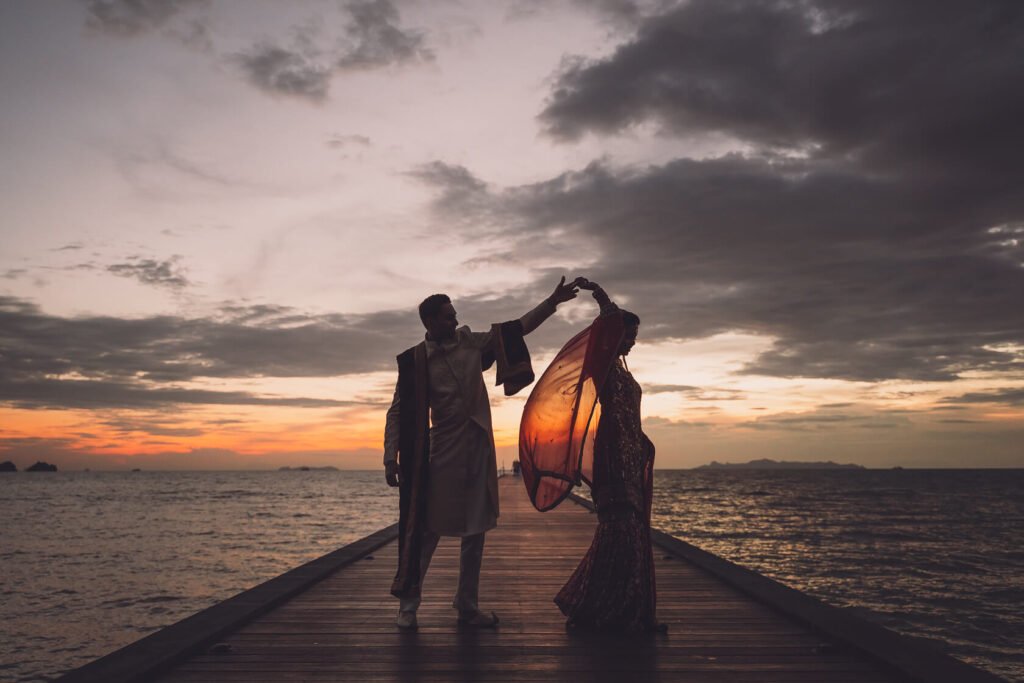
- The visual palette: Spain’s wedding aesthetic at its most distinctive is warm terracotta, whitewash, olive green and the deep blue of the Mediterranean. Indian bridal colours from saffron, magenta and peacock blue sits against these backgrounds with extraordinary visual contrast. From a photography standpoint, we consistently find that Indian and South Asian weddings in Spain produce some of the most visually rich images we make.
What Makes Spain Such a Strong Choice for an Indian or South Asian Destination Wedding?
Spain has become one of the most sought-after destinations for luxury Indian and South Asian weddings originating from the UK, the UAE, and directly from India. The reasons are specific and practical, not just about the beauty of the setting.
Why Do Indian Couples Choose a Destination Wedding in Spain?
- The outdoor space: Hindu ceremonies require outdoor space for pheras and a mandap setup that most hotel venues cannot support. Mallorcan fincas and Andalusian haciendas offer exactly this — large private grounds, no noise ordinance midnight pressures in most rural locations, and the infrastructure for multi-day celebrations.
- The multi-day format works naturally: Mehendi, Haldi, Sangeet and Wedding across 2–4 days at a Spanish finca or hacienda works beautifully. The exclusivity of most venues means the entire property is yours, the schedule is yours and nothing happens by hotel committee.
- The flight connections: Direct flights to Palma, Barcelona, Seville and Málaga from London Heathrow and Gatwick. Dubai to Palma (via connections) is manageable. For UK-based NRI families, Spain is one of the easiest European wedding destinations to reach.
- The visual payoff: We have said this before and mean it genuinely: the contrast of Indian bridal colour and jewellery against Spanish terracotta, limestone and whitewash is extraordinary. The photographs from a Mallorca or Seville Indian wedding have a visual signature that is unlike anything from a UK or Italian venue.
Which Spanish Regions Are Best for an Indian Wedding?
Mallorca: The Top Choice
Mallorca’s fincas are the most Indian-wedding-friendly venues in Spain. Large outdoor grounds for pheras and mandap installation, full exclusive hire, on-site accommodation, flexible vendor policies, and a wedding industry with growing South Asian wedding experience. Finca Cortesin, Can Simoneta and several private estates around Pollença and Alcúdia have experience with multi-day Indian celebrations. This is truly one of the most exotic locations couples consider for an Indian destination wedding in Spain.
Andalusia: For Scale and Grandeur
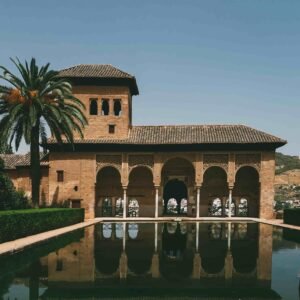
Andalusian haciendas offer the grandest setting for a large Indian wedding in Spain — estates of genuine antiquity, with multiple function spaces across courtyards, gardens and indoor salons that naturally accommodate the different formats of a sangeet night versus a wedding ceremony. Hacienda de San Rafael and the estates around Seville are the strongest options.
Barcelona: For City Logistics
For couples whose Indian wedding requires the hotel infrastructure of a major city — large ballrooms, on-site accommodation for hundreds of guests, proximity to the airport — Barcelona’s five-star hotels (Hotel Arts, Mandarin Oriental, El Palace) offer the scale and service quality that rural venues cannot match. Better for weddings of 200+ where operational complexity is a factor.
What Are the Practical Logistics for an Indian Wedding in Spain?
- Mandap installation: Confirm with the venue explicitly. Most fincas will permit mandap structures in their outdoor spaces; dimensions, weight and access for decorators must be agreed in advance.
- Havan and sacred fire: Requires an outdoor setting and specific fire safety compliance. Spanish rural venues generally accommodate this well — but get written confirmation, not a verbal assurance.
- Indian catering: Authentic Indian catering in Spain requires bringing in a specialist team — most commonly from the UK. This adds travel, accommodation and logistics costs but is non-negotiable for quality. Allow €200–€400+ per head for specialist South Asian catering.
- Pandit and priest: Most couples bring their own pandit from the UK or India. Budget for flights, accommodation and fees.
- Schengen visa for Indian guests: As covered in Section 4 — apply through BLS International Spain Visa at least 6–8 weeks before travel.

Full-Service Wedding Media Production: Wedding Photography & Video In Spain
Spain produces some of the finest wedding photography in Europe and for specific, articulable reasons. The light is extraordinary. The settings are visually rich without being cluttered. And the cultural warmth of Spanish celebration means there is always something real happening, not just posed moments.
Why Is Spain Such a Strong Setting for Documentary Wedding Photography?
The single most important factor in our experience covering destination weddings in Spain is the quality of the autumn light. September and October light in Andalusia and Mallorca has a warmth, directionality and golden quality that can last 90 minutes into the evening. For a couple who wants genuinely extraordinary documentary wedding photographs, not just correctly exposed images, the autumn light in Spain is a significant argument for choosing September or October over June.
Spain also rewards the documentary approach specifically because Spanish celebrations are genuine. The emotion at a flamenco performance is real. The chaos of a baraat through a finca courtyard is real. The late-night dancing is real. A photographer who is simply recording rather than directing will find Spain gives them extraordinary material.
At In The Fable Cameraworks, our approach is narrative-driven and editorial-leaning. We are not there to stage your day we are there to find the story it is telling and make it visible in every image. Spain, particularly for Indian and multicultural weddings, consistently gives us the conditions for that kind of work.
Which Photography Style Works Best for a Spanish Wedding Setting?
It depends on your venue and your aesthetic. For finca and hacienda settings, documentary photography that engages with the architecture and natural light works best these venues offer so much visual material that over-directed photography loses what makes them special. For urban Barcelona or coastal Ibiza, editorial photography with more deliberate creative direction tends to produce the strongest results. Most importantly: choose a photographer whose portfolio demonstrates consistency across the specific light conditions and venue types you are working with.
What Is the Right Planning Timeline for a Destination Wedding in Spain?
Spain’s most sought-after venues book faster than most couples expect. Mallorca in particular with a relatively short season of premium finca availability has venues confirming September dates 18 months out. Here is a realistic framework:
- 18–24 months out: Define vision and budget. Choose region. If considering Mallorca in September, begin venue conversations now.
- 12–18 months: Book venue. This anchors everything else. Hire your independent wedding planner. Begin photography and film conversations, peak season Spain dates for experienced teams book 12–18 months in advance.
- 12 months: Confirm photography and film team. Begin legal process if pursuing civil marriage in Spain (allow 3–6 months minimum). Send save the dates internationally include Schengen visa guidance for Indian guests.
- 9–12 months: Confirm caterer, florist, entertainment. For Indian weddings: secure specialist caterer (UK-based teams book out). Send formal invitations.
- 6–9 months: Finalise ceremony programme. Arrange group travel logistics for international guests. South Asian weddings: confirm pandit, mehendi artist, décor specialist with venue walk-through.
- 3–6 months: Final outfit fittings. Hair and makeup trials. Menu tasting at venue. Further, complete run-of-day document with planner. Share photography and film brief with your media production team.
- 1 week before: Arrive in Spain. Full venue walk-through. Guest welcome event, a local tapas dinner or a sunset cocktail at the venue is the ideal Spain welcome moment.
Vendors Needed for a Destination Wedding in Spain
Your Next Steps…
A destination wedding in Spain is, in our experience, one of the most rewarding celebrations to document. The light is unlike anywhere else in Europe. The venues carry centuries of character. The food is extraordinary. And the Spanish instinct for genuine celebration — generous, late, warm and full of music — creates an atmosphere that the best wedding photography thrives in.
At In The Fable Cameraworks, we are a full-service wedding media production company specialising in documentary-style, editorial-leaning photography and film for Indian, multicultural and South Asian weddings across Europe and South Asia. We cover destination weddings in Spain across Mallorca, Barcelona, Andalusia and beyond — each one approached as a unique story, each one produced with the same care and creative rigour.
Whether you are in the early stages of choosing Spain or you have a venue date and need the right media team to bring it to life, we are here.
IN THE FABLE CAMERAWORKS
Covering a destination wedding in Spain is something we love; the light, the settings and the warmth of the celebrations here consistently produce work we are proud of. If you are planning a wedding in Spain and want to talk about photography and film that is genuinely story-led and creative direction-focused, get in touch with our team.
Frequently Asked Questions (FAQs) - Destination Wedding in Spain
- Can foreigners get married easily in Spain?Yes, though at least one party is typically required to be a Spanish resident or citizen for a civil marriage at the Registro Civil. Most international couples marry legally at home and hold a symbolic ceremony in Spain. Catholic ceremonies are legally recognised.
- What is the average cost of a wedding in SpainWedding in Spain cost ranges from approximately €25,000 for a small intimate celebration to €400,000+ for a large multi-day luxury event. A typical mid-scale destination wedding in Spain of 100–150 guests with a venue, caterer, planner, photographer and florals runs €70,000–€160,000. The biggest single cost variable is whether you need specialist South Asian catering sourced from outside Spain.
- What is the best time for a destination wedding in Spain?Late April through June and mid-September through October are the best windows for most regions. September and October offer the finest photography conditions; golden light, warm temperatures, harvest season. Avoid Andalusian July–August if any ceremony is outdoors. The Canary Islands are viable year-round.
Comments
Sorry, the comment form is closed at this time.
Pingback: Mallorca Wedding Venues: Stunning spaces for your big day
Pingback: Mallorca Wedding Photographer: Capturing Stunning Visuals
Pingback: Barcelona Wedding Photographer: Capturing magic on your day