

AT A GLANCE
- Can foreigners legally get married in Singapore?
- Yes. Foreign nationals can marry in Singapore through a civil ceremony at the Registry of Marriages (ROM), or through a recognised religious ceremony (Muslim via ROMM, Christian via a licensed minister, Hindu via HEB-registered temple). Both parties must be present in Singapore for the 21-day notice filing and the ceremony. Most international couples marry legally at home and hold a symbolic ceremony in Singapore for full creative flexibility. Official guidance: Singapore Registry of Marriages
- How much does a wedding in Singapore cost?
- Budget ranges from SGD 40,000 for a small intimate celebration to SGD 800,000+ for a large multi-day South Asian wedding. A mid-scale celebration of 100–150 guests at a flagship hotel typically runs SGD 100,000–220,000. Singapore hotels price on per-head F&B minimums (SGD 200–400+ per head) rather than flat venue hire fees — this is the key cost driver to understand from the outset.
- What are the best venues for a wedding in Singapore?
- Capella Singapore (Sentosa) leads for luxury resort weddings and multi-day South Asian celebrations. Marina Bay Sands for iconic skyline drama at scale. Raffles Singapore for heritage grandeur. Andaz Singapore for contemporary elegance. Gardens by the Bay for outdoor ceremony settings. Chijmes Hall for intimate Gothic heritage. Each is covered in full detail in Section 3.
- When is the best time of year to get married in Singapore?
- February to April is the most reliably dry window. May to September is also excellent. Avoid November to January if any element of the wedding is outdoors — this is the northeast monsoon season. Chinese couples should factor in auspicious date selection from the outset, which significantly affects practical availability across all months.
- Is Singapore good for an Indian or South Asian wedding?
- Exceptionally so. Singapore has established South Asian infrastructure; quality Indian caterers, local pandit services, vendors experienced in South Asian bridal aesthetics and hotels well-practised at multi-day celebrations. Changi Airport’s direct connections from Mumbai, Delhi, Chennai, Dubai and London make guest travel simpler than most European alternatives. The visual contrast of Indian bridal looks against Singapore’s architectural settings is, from our experience as documentary wedding filmmakers, extraordinary.
Weddings in Singapore are unlike any other in the world. Not because of a single landmark or one defining aesthetic, but because Singapore is, genuinely and simultaneously, many things at once. It is a city of extraordinary skylines and ancient temples, Michelin-starred restaurants and legendary hawker stalls, colonial black-and-white bungalows draped in frangipani and glass-and-steel towers reflecting the equatorial sky. Choosing to have your wedding in Singapore means choosing a backdrop that can be reinvented for every couple, every culture, every vision.
It is also, by any practical measure, one of the easiest cities in the world to get married in. Changi Airport connects Singapore to London, Dubai, Mumbai, Sydney and Hong Kong with the kind of efficiency that makes flying in 200 guests feel genuinely manageable. The city is English-speaking, immaculately organised and its hospitality infrastructure — honed by decades of hosting international events at the highest level — is simply world-class.
At In The Fable Cameraworks, we are a full-service wedding media production company specialising in documentary-style, editorial-leaning photography and film for Indian, multicultural and South Asian weddings across Europe and South Asia. We have documented weddings in Singapore across cultures and continents — from Chinese tea ceremonies and Hindu pheras on the same island within the same week, to multi-day South Asian celebrations and intimate civil solemnisations. What never changes is Singapore’s extraordinary ability to hold every kind of love story without any of them feeling out of place. If you’re seeking a full-service wedding media production for multi-day celebrations, discuss your requirements with our team.
This guide is written for couples who are considering a wedding in Singapore from outside the country; whether you are based in the UK, the United States, the Middle East, India, or anywhere else in the world. We cover everything: venue types, legal requirements, cultural traditions, costs, timing, guest logistics and the vendors you need to make it work beautifully.
Why Singapore? The Case for Weddings in Singapore
Couples who choose Singapore for their wedding tend to be people who resist easy categories. They want the grandeur of a world-class venue without the remoteness of a countryside estate. They want the energy and convenience of a great city without sacrificing beauty or elegance. They want to get married somewhere their guests will genuinely want to travel to. Singapore answers all of it.
A City Built for Celebration
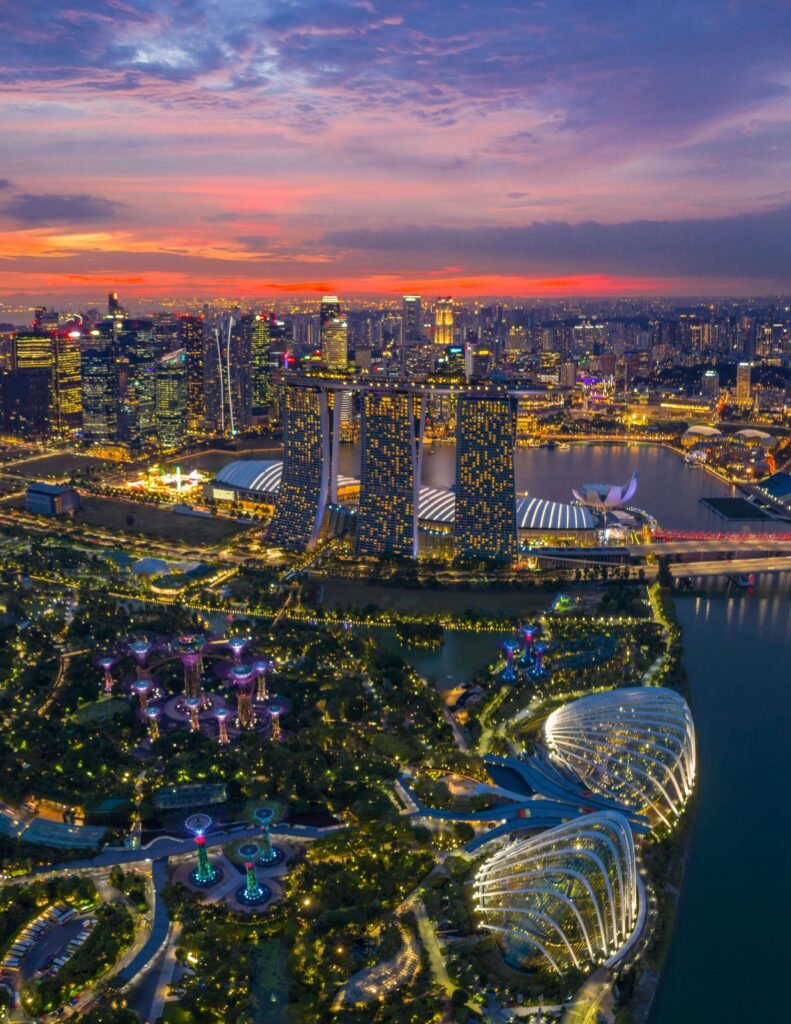
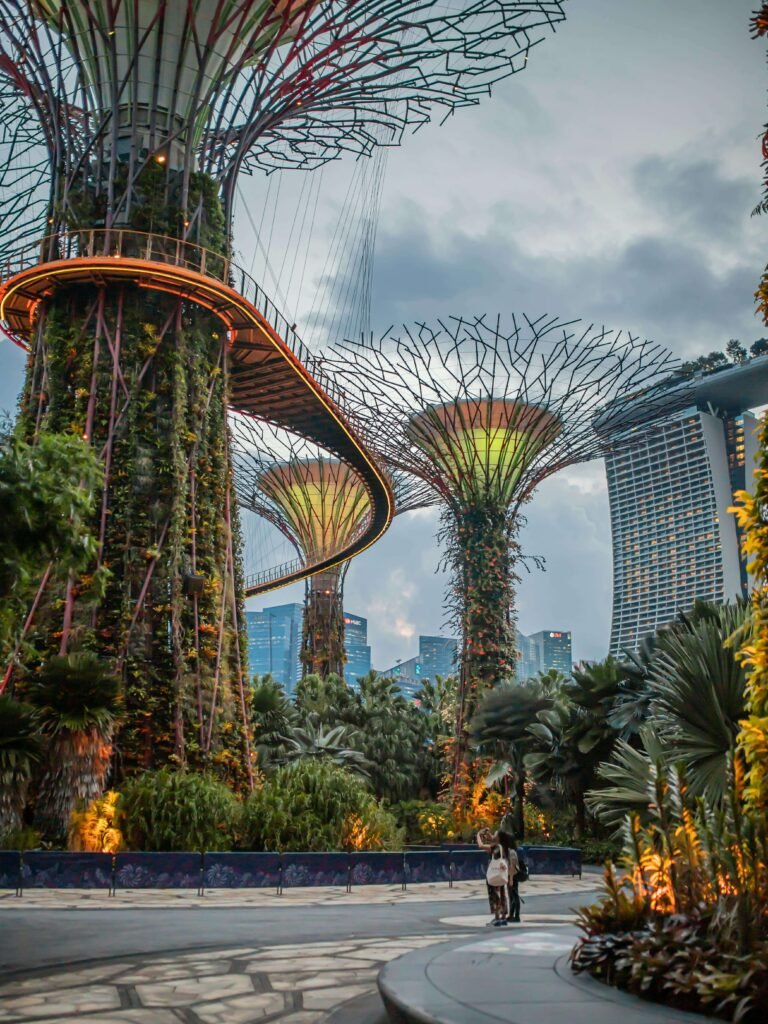
The backdrops available for a wedding in Singapore are genuinely extraordinary, and they span a far wider range than most couples initially expect. Gardens by the Bay— with the Supertrees lit against the night sky — is one of the most dramatic ceremony settings on earth. Fort Canning Park, a former British military headquarters wrapped in tropical greenery, offers colonial romance in the heart of the city. Furthermore, the Marina Bay waterfront provides a skyline panorama that is immediately, unmistakably Singaporean. And Sentosa Island, connected to the mainland by road and cable car, gives couples an entire resort island to work with.
This diversity matters practically. It means a wedding in Singapore can be sleek and editorial, lush and tropical, grand and palatial, or intimate and hidden, without ever leaving the city. According to the Singapore Tourism Board, Singapore hosts over 20 million international visitors annually, testament to the city’s world-class hospitality infrastructure and its ease as a destination. You are not choosing between aesthetics and logistics. You get both. How many destinations can you say the same about?
The Most Connected City in Asia
Changi Airport is, consistently, ranked the world’s finest. According to Skytrax’s World Airport Awards, Changi has claimed the top position multiple times and is the gateway connecting Singapore directly to London Heathrow (approximately 13 hours), Dubai (7 hours), Mumbai (5.5 hours), Chennai (4 hours), Sydney (8 hours), Hong Kong (3.5 hours), and Tokyo (7 hours). For couples with a geographically dispersed guest list, a common reality for NRI couples, expat families, and multicultural weddings, this connectivity is genuinely transformative.
When we cover a wedding in Singapore from a media production standpoint, we consistently find that guests arrive relaxed, not exhausted. That energy comes through in every frame. And visuals are how you will always remember your big day.
Multicultural by Design, Not by Accommodation
Every other destination in this guide has had to learn to accommodate cultural diversity. Singapore was built with it. The Chinese, Malay, Indian and Western communities that have coexisted here for generations mean that a Hindu mandap, a Buddhist tea ceremony, a Muslim nikah and a Western civil solemnisation all have deep-rooted, sophisticated local infrastructure. As Lonely Planet notes, Singapore’s multicultural fabric is one of its most defining and compelling qualities as a travel destination — and it is equally compelling as a wedding destination. Singapore does not need to adapt for your traditions. It already contains them.
This is, from our experience as a global wedding media production, one of Singapore’s most underappreciated qualities. The vendors, venues and suppliers who work on weddings in Singapore understand cultural nuance in a way that takes years to build elsewhere.
Food Culture That Rivals the Ceremony
If Italian food is the world’s most beloved, Singaporean food is arguably the world’s most interesting. The city’s hawker culture is recognised by UNESCO on its Intangible Cultural Heritage list— a remarkable distinction that reflects the genuine depth and distinctiveness of Singapore’s culinary identity. Alongside that street food culture sits a constellation of Michelin-starred restaurants, making Singapore one of the most decorated dining cities in Asia. For couples concerned about dietary requirements — halal, vegetarian, Jain, South Indian, North Indian, Cantonese, Peranakan — Singapore is a revelation. Every tradition is catered for, at genuine quality.
Singapore vs the Alternatives
Couples who are considering Southeast Asia for their wedding often compare Singapore against Bali, Bangkok or Phuket. Bali is extraordinary for rustic, bohemian resort weddings, but its infrastructure for large, multicultural celebrations is limited. Thailand offers stunning resort settings but its destination wedding industry is primarily designed for smaller, Western-aesthetic events. Condé Nast Traveller consistently ranks the country among Asia’s top city destinations precisely for the combination of world-class infrastructure, safety, and cultural richness that makes it so compelling for weddings in Singapore. Singapore wins on logistics, cultural infrastructure, and the sheer range of what is possible in a single city.
Singapore Wedding Venues: A Guide to Every Setting
One of the first things that strikes us when we arrive to document a wedding in Singapore is how different each venue type is from the last. Unlike European destinations where the dominant aesthetic tends toward stone, greenery and candlelight, Singapore’s venue landscape is genuinely varied; from the hyper-contemporary to the deeply historic, the open tropical garden to the marble-floored hotel ballroom. Here is an honest guide to each type and who it suits.
Luxury Hotel Ballrooms for Stunning Weddings in Singapore
The hotel ballroom is the backbone of the wedding industry in Singapore, and with good reason. Singapore’s flagship hotels offer wedding infrastructure that is among the finest in the world: dedicated wedding coordinators with decades of experience, full in-house catering teams equipped for every cultural requirement, accommodation for hundreds of guests under the same roof and the kind of service standard that is difficult to achieve at standalone venues.
The standout properties for a wedding in Singapore at this scale are:
- Capella Singapore (Sentosa Island): Set in restored colonial buildings surrounded by tropical gardens, it is one of the most visually beautiful hotel settings in Asia and our first recommendation for multi-day South Asian celebrations.
- Raffles Singapore: A National Monument and the most storied hotel in Southeast Asia. The Jubilee Ballroom (250+ guests) and Palm Ballroom (up to 180) bring genuine heritage gravitas to any celebration.
- Four Seasons Singapore: Sophisticated urban luxury with Michelin-starred catering and intimate event spaces. Strong for mid-scale celebrations seeking refinement over grandeur.
- Marina Bay Sands: Unmatched for scale and skyline drama. The Sands Grand Ballroom accommodates thousands; the SkyPark setting is iconic for intimate ceremonies above the city.
- The Fullerton Hotel Singapore: A neoclassical National Monument on the waterfront. The Ballroom with its 386,000-crystal chandeliers and the intimate Straits Room are both exceptional. From a media production standpoint, the architectural light here is consistently extraordinary.
- Andaz Singapore: Contemporary elegance at Bugis. The Glasshouse (up to 280 guests) and Garden Studio (up to 130 guests) offer a distinctly modern alternative to the grand heritage properties.
Best for: Any cultural tradition, large celebrations (150–600+ guests), couples who want full-service infrastructure, multi-day programmes.
Gardens and Outdoor Settings
A wedding in Singapore’s gardens is an experience unique to the tropics. The vegetation is extraordinary; the scale, the colour, the texture of equatorial plant life gives outdoor ceremony settings a lushness that European gardens cannot replicate.
- Gardens by the Bay: the Flower Field Hall within the Flower Dome and the outdoor Supertree Grove are the most internationally recognisable settings for a wedding in Singapore. Iconic, dramatic, genuinely extraordinary.
- Singapore Botanic Gardens: a UNESCO World Heritage Site. Burkhill Hall, the colonial plantation house overlooking the National Orchid Garden, seats up to 180 for intimate heritage celebrations.
- Fort Canning Park: a historic hilltop park in the heart of the city. The Fort Gate lawn and Old Married Soldier’s Quarters offer a quaint, colonial outdoor setting for smaller ceremonies. Managed by NParks/Event Butler.
The practical caveat: outdoor weddings in Singapore require genuine weather planning. Any outdoor wedding in Singapore must have a full indoor contingency; not as a backup, but as an equally prepared primary option.
Best for: Intimate ceremonies (30–100 guests), editorial and documentary-style photography and film, ceremony-only settings before an indoor reception.
Rooftop and Skyline Venues – Classic Singapore wedding venues
Singapore’s skyline is one of the great urban vistas in the world, and at night it is genuinely extraordinary. The Marina Bay area concentrates the best skyline views. Marina Bay Sands SkyPark offers a ceremony setting 200 metres above the city that is immediately, unmistakably Singaporean. Several rooftop bars and event spaces in the CBD operate as private hire venues for receptions and cocktail hours — worth exploring with your planner for something genuinely distinctive.
Best for: Cocktail receptions, evening ceremonies, smaller celebrations (50–120 guests), editorial-aesthetic couples.
Heritage and Colonial Properties
Singapore’s colonial history has left behind extraordinary built fabric — black-and-white bungalows, art deco civic buildings, Peranakan shophouses painted in faded pastels.
- Chijmes Hall — a restored 19th-century Neo-Gothic chapel in the civic district, managed by Watabe Wedding. Crystal chandeliers, stained glass by Belgian artist Jules Dobbelaere (1903), and a capacity of up to 308 guests. One of Singapore’s most atmospheric wedding settings.
Dempsey Hill — former colonial barracks converted into restaurants and event spaces — offers a more intimate, garden-adjacent alternative for smaller celebrations. The White Rabbit restaurant at Dempsey, housed in a former chapel with stained glass and high beams, is a particular favourite.
Best for: Intimate weddings (30–150 guests), architecturally-driven couples, those for whom the sense of place matters as much as the service infrastructure.
Sentosa Island – Where all the fun weddings in Singapore happen
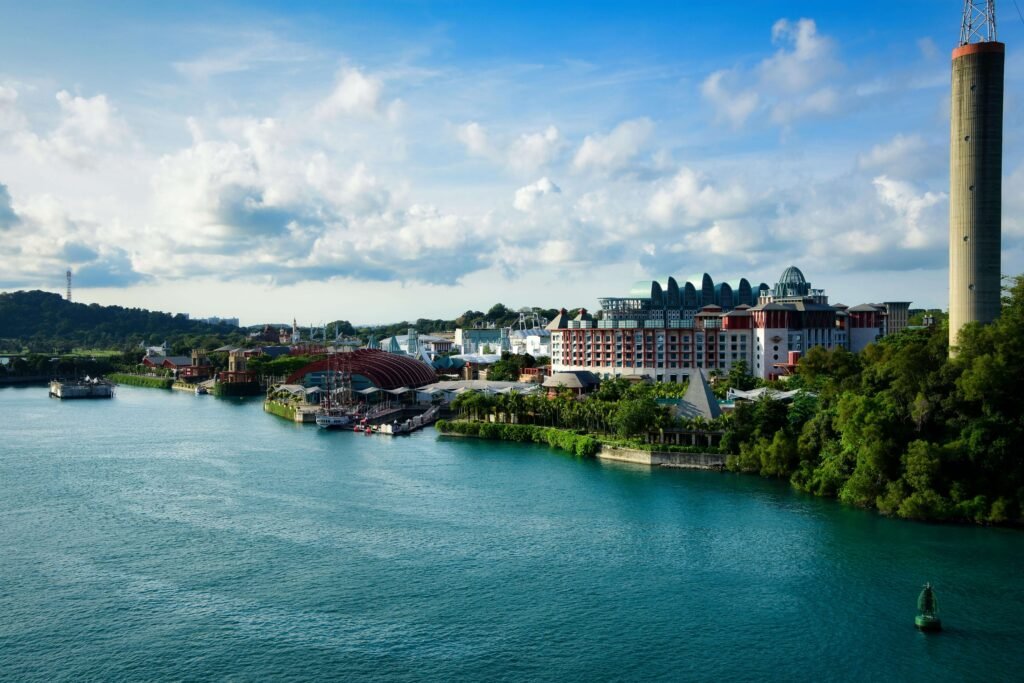
Sentosa is Singapore’s resort island — connected to the mainland by road, cable car and monorail, but distinctly separate in atmosphere. Capella Singapore is the standout property: a collection of restored colonial bungalows and contemporary wings set in 30 acres of tropical gardens. It is, in our view, the single finest venue for a large, multi-day luxury wedding in Singapore. The Grand Ballroom — circular, with a glass-dome skylight and Singapore’s largest LED Wall at 81 square metres — is spectacular. Multiple outdoor ceremony spaces for mandap installation, extensive on-site accommodation, and an exceptionally experienced team make it the natural first conversation for Indian and South Asian celebrations.
Best for: Multi-day celebrations, luxury-first couples, weddings with international guests who want a resort experience, South Asian weddings requiring outdoor ceremony space.
Private Clubs and Exclusive Estates
Singapore has several exclusive private clubs and estates available for weddings on a members or approved-guest basis. The Tanglin Club and Singapore Island Country Club offer a level of exclusivity and discretion that appeals to couples who want their wedding in Singapore to feel genuinely private. These venues work best for smaller, curated celebrations where intimacy is the priority.
Best for: Very intimate celebrations (under 80 guests), couples who prioritise privacy and exclusivity.
When to Get Married in Singapore: A Seasonal Guide
Singapore sits one degree north of the equator. That means one thing above all else: it is always warm (typically 26–33°C), always humid, and always capable of producing rain. There are no seasons in the European sense. But there is a meaningful difference between Singapore’s wetter and drier periods, and for a wedding in Singapore that includes any outdoor elements, this distinction matters.
| Period | Months | Weather | Suitability |
| Peak dry | Feb – Apr | Warm, low rainfall | Best months. Ideal for outdoor ceremonies. Book early — venues fill fast. |
| Good | May – Sep | Warm, brief showers | Excellent. Inter-monsoon showers are short. Evening ceremonies unaffected most days. |
| Shoulder | Oct – Nov | Increasing rainfall | Manageable with contingency. Some venues offer lower rates. |
| Monsoon | Nov – Jan | Heaviest rainfall | Outdoor events need full indoor backup. Not a hard no, but plan accordingly. |
February to April: The Standout Window
The driest, most reliable months for a wedding in Singapore are February through April. The northeast monsoon has eased, the southwest monsoon has not yet arrived, and the city settles into its most consistent period. Chinese New Year falls in this window — worth checking against auspicious date requirements. Outdoor settings are at their best.
A Note on Auspicious Dates
For a significant proportion of couples planning a wedding in Singapore, the calendar is not simply a question of weather. For Chinese couples, auspicious date selection by a Feng Shui master or Chinese almanac consultation is standard practice. For Hindu couples, muhurtham timing can determine not just the date but the specific hour of the ceremony. Both practices are deeply respected in Singapore’s wedding industry and can significantly affect which dates are available. Begin this process early — and build it into your venue search before you fall in love with a specific Saturday.
How to Legally Get Married in Singapore as a Foreign National

The legal process for weddings in Singapore is considerably more straightforward than many couples expect — Singapore’s administrative machinery is efficient, English-language, and well-documented. But it requires advance preparation, and the details matter. Here is a clear breakdown of your options as observed in other weddings in Singapore.
Civil Marriage at the Registry of Marriages (ROM)
Singapore’s Registry of Marriages administers all civil marriages. Foreign nationals can legally marry in Singapore — both parties must be physically present in Singapore for both the Notice of Marriage filing and the ceremony itself.
The 21-day rule: Couples must file a Notice of Marriage at the ROM at least 21 days before the wedding ceremony, and no more than three months before. We advise international couples to begin documentation at least three months before the intended date.
Required documents: Valid passports for both parties, proof of single status from your home country (typically a Certificate of No Impediment or statutory declaration), full birth certificates. Previous marriage: divorce decree absolute or death certificate required. Foreign-language documents must be officially translated into English to prepare for weddings in Singapore.
The ceremony: Must be conducted by a Licensed Solemniser — either a ROM registrar or a civil celebrant licensed by the ROM. Civil ceremonies can take place at ROM premises or at any venue licensed for external solemnisations. Many Singapore hotel venues and event spaces hold this licence.
Religious Marriages
Singapore legally recognises four categories of religious marriage:
- Muslim marriages: Administered by the Registry of Muslim Marriages (ROMM) under the Administration of Muslim Law Act. The nikah is conducted by a licensed Kadi (solemniser). Couples must register with ROMM and complete mandatory pre-marriage preparation.
- Christian marriages: Conducted by a licensed minister of religion at a registered church. The minister must be licensed by the ROM to solemnise marriages. For the current list of licensed solemnisers and formal guidance, refer to the Registry of Marriages.
- Hindu marriages: Hindu marriages conducted at temples registered with the Hindu Endowments Board (HEB) are legally recognised. A Hindu ceremony conducted outside a registered HEB temple requires a separate civil registration for legal recognition.
- Civil ceremonies: Available to all couples regardless of faith, through the ROM. This remains the simplest and most flexible route for international couples.
Symbolic Ceremonies
A significant number of international couples choose to marry legally in their home country and hold a symbolic ceremony, not legally binding, in Singapore. This is fully valid and offers complete freedom over venue, ceremony format, celebrant choice, and cultural content without any legal restriction. For interfaith couples, mixed-heritage couples, or those whose religious tradition is not legally recognised in Singapore, a symbolic ceremony combined with legal registration at home is often the most practical route.
Visas and Entry
Singapore is visa-free for UK, US, Australian, EU, and most Western passport holders for stays up to 30–90 days. Indian passport holders require a visa — an eVisa is available online through ICA Singapore and is typically processed in 3–4 working days. Saudi, Qatari, and Emirati nationals should check current exemption status. Always include visa guidance in your save the dates for Indian and regional guests.
IN THE FABLE CAMERAWORKS
We have filmed weddings in Singapore for couples arriving from London, Mumbai, Dubai and Sydney within the same celebration. In our experience, the ICA visa process for Indian guests is consistently straightforward when applied for with enough lead time, we advise building this into your guest communication from the save the date stage. If you’re looking for a full-service wedding media production, get in touch with our team now.
How Much Do Weddings in Singapore Cost? A Realistic Guide
Weddings in Singapore are not inexpensive, but it is, for the couples who choose it, genuine value. The infrastructure, the service standard, the food quality, and the sheer range of what is achievable in this city are difficult to match anywhere in Asia at comparable price points. Here is an honest breakdown.
Budget Tiers for Weddings in Singapore
| Intimate (20–50 guests) | SGD 40,000 – 90,000. Boutique venue or hotel private dining room, symbolic or civil ceremony, local catering, one photographer/videographer. |
| Mid-range (80–150 guests) | SGD 100,000 – 220,000. Hotel ballroom, full F&B package, wedding planner, photography and videography, florals, entertainment. |
| Luxury (150–300 guests) | SGD 220,000 – 500,000+. Premium hotel or Capella Sentosa, full production, specialist catering, international entertainment, photography and film. |
| Multi-day multicultural | SGD 350,000 – 800,000+. Two to four events across multiple days, specialist South Asian caterers and decorators, multi-faith ceremony logistics, full accommodation block. |
How Singapore Hotels Price Their Weddings
This catches international couples by surprise. Unlike European venues which typically charge a flat hire fee plus catering, Singapore hotel ballrooms price primarily on a per-head food and beverage minimum. Your venue cost is directly tied to your guest count and the per-head minimums for premium hotel venues on a Saturday evening range from SGD 200 to SGD 400 or more, before décor, entertainment or additional room hire. Factor this into your budget modelling from the outset.

What Drives the Cost for Weddings in Singapore
- F&B minimums: The largest single line item for most hotel weddings in Singapore. SGD 200–400+ per head for a full seated dinner is the benchmark at flagship properties.
- Accommodation: Singapore’s hotels are expensive by international standards. Budget SGD 180–380 per room per night for 4-star properties; SGD 400–900 for luxury. Negotiate a room block early.
- Photography and film: Wedding media production in Singapore from an experienced destination company typically runs SGD 5,000–15,000+ for full-day coverage. For a multi-day celebration requiring multiple cameras, documentary coverage and cinematic edit, budget accordingly.
- Specialist catering: If you require Indian, halal-certified, or multi-cuisine catering beyond the hotel’s standard offering, specialist external caterers can typically be brought in at a surcharge. Confirm this with the venue early.
- Hidden costs: Singapore’s standard GST is 9%. Service charge is typically 10%. Combined, this adds 19% to most vendor quotes that are presented before tax. Always confirm whether quotes are before or after these charges.
Weddings in Singapore: The Multicultural Landscape
To understand what makes a wedding in Singapore so distinct from any other destination, you need to understand Singapore’s cultural DNA. This is a city where four major communities — Chinese, Malay, Indian and Western — have lived alongside each other for generations. The result is not a melting pot in the diluted sense, but a genuine coexistence: each tradition alive, distinct, and deeply practised, while the city holds space for all of them simultaneously.
That coexistence has built an extraordinary wedding industry infrastructure. In Singapore, vendors understand cultural nuance not because they have researched it, but because they have grown up around it. From our experience documenting multicultural weddings in Singapore, this depth of cultural literacy shows in every detail and it is one of the most compelling reasons to choose this city.
Chinese Wedding Traditions in Singapore
The Chinese wedding in Singapore is a multi-stage celebration rooted in Confucian principles of family, respect and auspiciousness. The banquet is the centrepiece; a typically 10-course Chinese dinner, round tables of ten, toasts (yum seng), speeches and often a lion dance performance.
The Guo Da Li (betrothal ceremony) formalises the engagement through an exchange of symbolic gifts. An Chuang (bed-setting) and the Hair Combing Ceremony prepare the couple spiritually. On the wedding day itself, the Gate-Crashing (men cai) where the groom’s party completes challenges set by the bridesmaids before being allowed to collect the bride is a moment of joy and comedy that, as documentary filmmakers, we always plan for carefully.
Chinese couples planning a wedding in Singapore must begin auspicious date selection early — specific dates are considered propitious for marriage and others are avoided entirely. The 12–18 month planning window standard for Chinese weddings in Singapore exists primarily for this reason.
Malay and Muslim Weddings
Malay weddings in Singapore are built around two central ceremonies: the Akad Nikah (solemnisation under Syariah law, conducted by a licensed Kadi through the Registry of Muslim Marriages) and the Bersanding (enthronement of the couple on a bridal dais). The Bersanding is a ceremony of extraordinary visual richness — the songket fabric, the floral arrangements, the elaborate headpieces — that documents magnificently.
Indian and South Asian Weddings
Indian weddings in Singapore have a dedicated section below. Given the scale of the South Asian diaspora audience we serve and the complexity of what a multi-day Indian celebration in Singapore involves, it deserves the space.
Western and Civil Weddings in Singapore
Singapore has a large and growing community of expatriates, mixed-heritage couples, and internationally-based couples who want a modern, culturally neutral celebration. A civil solemnisation at a licensed Singapore venue — hotel ballroom, garden setting, heritage property — followed by a reception dinner is a clean, elegant format that works extremely well.
Interfaith and Mixed-Heritage Weddings
Singapore’s multicultural DNA makes it one of the most genuinely equipped destinations in the world for interfaith and mixed-heritage weddings. The infrastructure exists. The vendors understand the complexity. The venues have done it before. From our perspective as a production company that has documented Hindu-Christian, Chinese-Indian and Malay-Western weddings in Singapore, the operational capacity here is extraordinary.
Indian and South Asian Weddings in Singapore
Singapore has become one of the most sought-after destinations for luxury Indian weddings originating from the UK, the United States, the UAE, and directly from India. We specialise in documentary and editorial wedding media production for Indian, multicultural and South Asian celebrations. We have covered Hindu weddings, Sikh celebrations, South Indian ceremonies and North Indian multi-day events in Singapore. What follows is drawn from that experience, not from a brochure.
Why Singapore Works for Indian Diaspora Weddings
- The South Asian infrastructure is already there: Little India is one of the most culturally vibrant Indian communities outside South Asia: temples, jewellers, clothing boutiques, sweet shops, specialist catering companies.
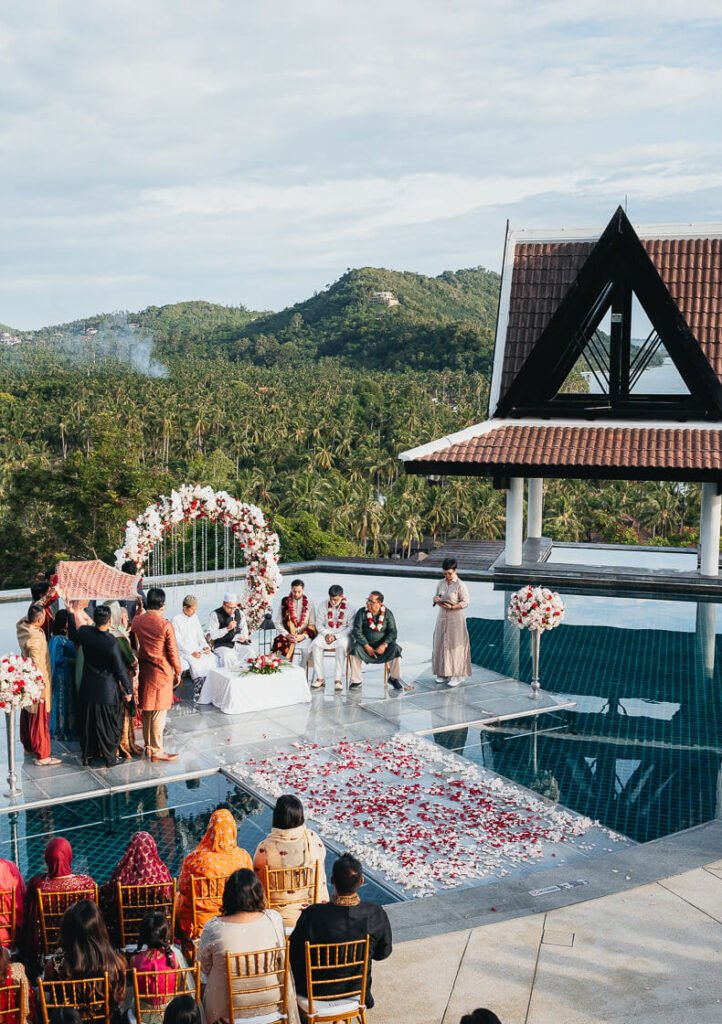
- Multi-day format is well-supported: Mehendi, sangeet and wedding day format works exceptionally well at a venue like Capella Sentosa or Marina Bay Sands, both experienced in multi-event South Asian celebrations.
- Catering is genuinely high quality: Unlike planning an Indian wedding in Europe, Singapore has established Indian catering companies operating at a luxury level. North Indian, South Indian, halal Indian: all available locally.
- Pandit and priest services: Hindu priests are available through Hindu Endowments Board-recognised temples. Most established Singapore wedding planners maintain relationships with pandits for ceremonies conducted outside temple settings.
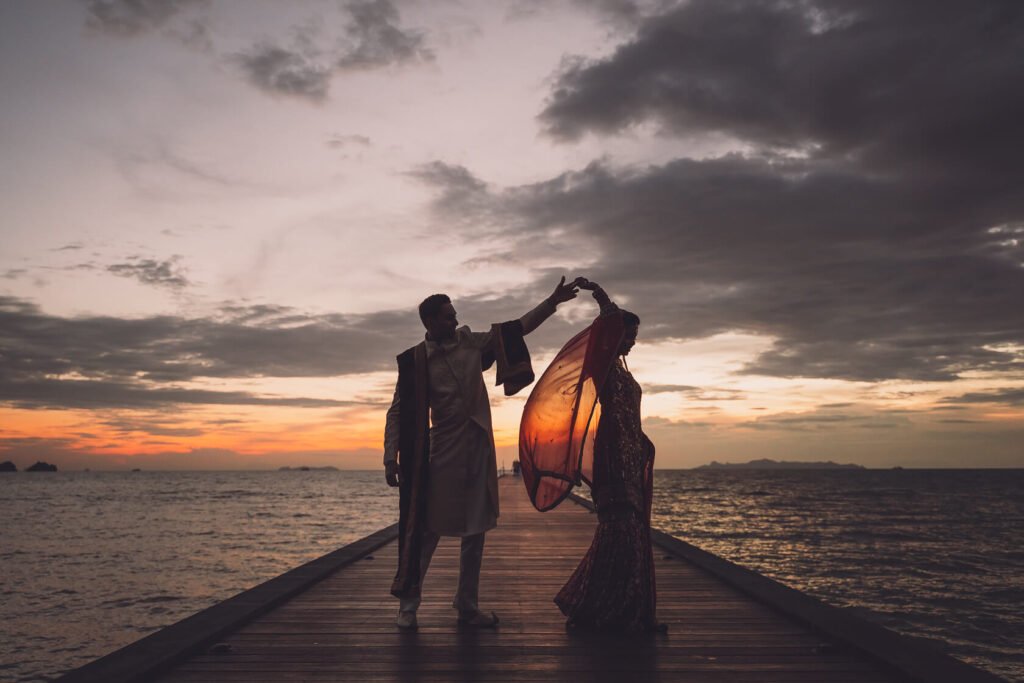
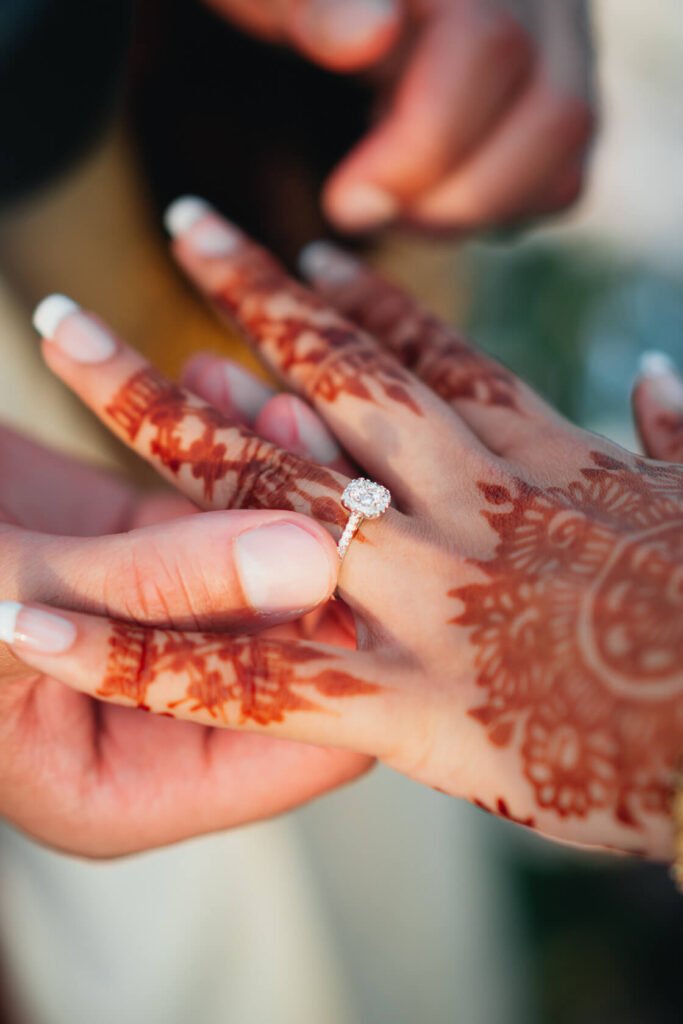
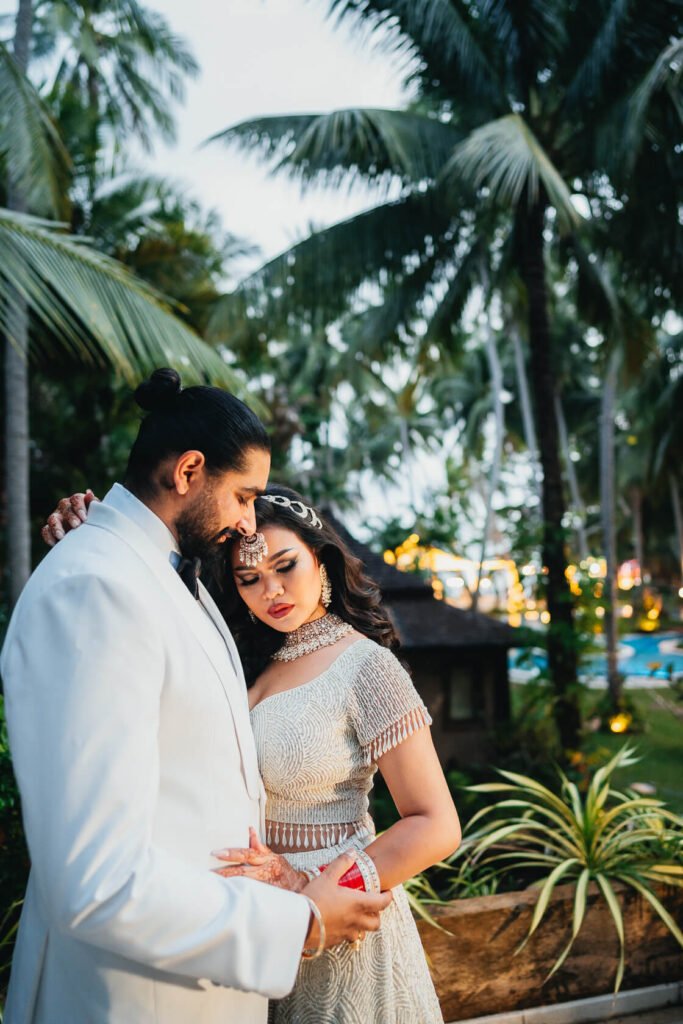
- The photography and film opportunity: The juxtaposition of Indian bridal looks — the lehenga, the jewellery, the mehndi — against Singapore’s architectural and tropical settings produces some of the most visually striking wedding content we make. The equatorial light, particularly at golden hour, is unlike anything available in northern Europe.
Best Venues for Indian Weddings in Singapore
Capella Singapore — For magical weddings in Singapore
Capella Singapore is the standout recommendation for multi-day Indian wedding in Singapore at the luxury level. Multiple outdoor ceremony spaces suitable for mandap installation, indoor ballrooms for sangeet and reception dinners, extensive on-site accommodation across villas and rooms, and a team experienced in South Asian celebrations. The combination of colonial heritage architecture, tropical landscaping and island location makes it the most visually versatile venue for Indian weddings in Singapore.
Marina Bay Sands (a dream for luxury weddings in Singapore)
For sheer scale — a 300–400 guest Indian wedding in Singapore with a skyline that announces its ambition from the first frame — Marina Bay Sands is unmatched. The ballroom capacity, hotel accommodation volume, and the iconic skyline backdrop make it the natural choice for large celebrations where grandeur is the priority.
Four Seasons Singapore and Andaz Singapore
For mid-scale luxury Indian celebrations (80–200 guests), the Four Seasons Singapore and Andaz Singapore both offer excellent mandap-friendly event spaces, strong F&B teams experienced with Indian cuisine requirements and the aesthetic quality that photographs and films beautifully.
Ceremony Logistics
- Mandap installation: Most Singapore hotel venues permit mandap structures but confirm dimensions, weight restrictions and access for decorators in your initial venue conversation. Do not assume however.
- Havan / sacred fire: An outdoor setting is required and Singapore’s venues handle this through their fire safety protocols. Have your planner confirm explicitly with the venue’s operations team — the process is established, but it needs advance sign-off.
- Dhol and live Indian music: Singapore has strict noise ordinances; outdoor events typically conclude by 10:30pm. Indoor hotel events can run later. Dhol performances within hotel venues are generally manageable; confirm the specific policy with your venue.
- South Asian décor specialists: Singapore has several established South Asian wedding décor companies experienced in heavy floral canopies, silk draping and marigold installations. Coordinate early and ensure your decorator visits the venue in person before finalising designs.
Guest Logistics from India, UK and Middle East
From India: Direct flights to Changi from Mumbai (5.5 hours), Delhi (6 hours), Chennai (4 hours), Bengaluru (4.5 hours). Indian passport holders require a Singapore eVisa — apply through ICA Singapore at least two weeks before travel.
From the UK: Singapore Airlines and British Airways both operate direct London Heathrow–Changi service (approximately 13 hours). Visa-free entry for British passport holders for up to 90 days.
From the Middle East: Emirates, Etihad, Qatar Airways and Singapore Airlines all serve Gulf routes. Dubai to Singapore approximately 7 hours direct. UAE, Saudi and Qatari nationals should check current visa exemption status at ICA Singapore.
IN THE FABLE CAMERAWORKS
When we document Indian weddings in Singapore, we plan for the quality of equatorial light at sunrise and early morning, the first mehendi ritual, the haldi preparations, as carefully as we plan for the ceremony itself. The soft morning light in Singapore before the heat of the day is extraordinary, and it shapes our entire production schedule.
The Vendors You Need for a Wedding in Singapore
Singapore’s professional wedding vendor community is mature, internationally experienced and accustomed to working with the complexities of multicultural celebrations and destination couples.
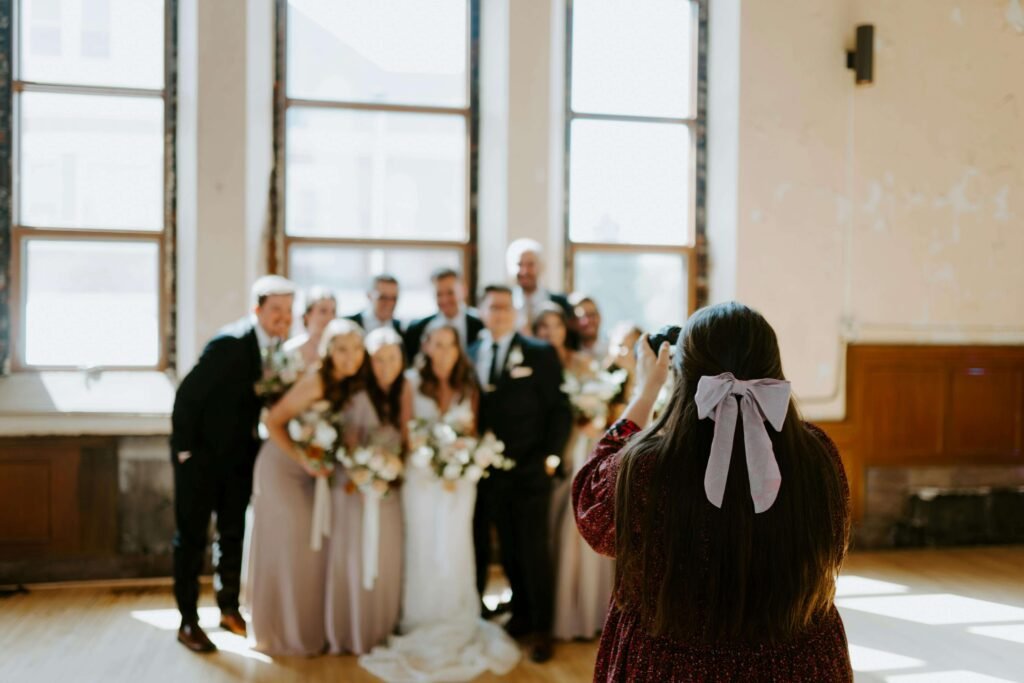
Timeline for Weddings In Singapore
Weddings in Singapore need early planning particularly for hotel venues on peak dates, and for Chinese couples whose auspicious date selection process needs to happen before venue booking can begin.
- 18–24 months out: Set your vision, agree your budget, define the cultural format. If you are a Chinese couple, begin auspicious date consultation now. Visit Singapore if possible; a reconnaissance trip to two or three venues changes the decision entirely.
- 12–18 months: Book your venue. This is the single most important action. Everything else follows from the date. Hire your independent wedding planner. Top Saturday dates at flagship properties can book 18 months out.
- 12 months: File your Notice of Marriage at the ROM (within the 3-month window, at least 21 days before the ceremony). Book your photography and film team. Secure guest accommodation blocks.
- 9–12 months: Confirm caterer (if external), florist, décor specialist, entertainment. Send save the dates internationally, including eVisa guidance for Indian guests. Begin menu discussions.
- 6–9 months: Finalise ceremony programme. Send formal invitations. Arrange group travel logistics. For South Asian weddings: confirm specialist décor company, pandit, mehendi artist.
- 3–6 months: Bridal outfit fittings. Hair and makeup trials. Menu tasting at the venue. Confirm full run-of-day schedule with your planner.
- 1–3 months: All supplier contracts finalised. Detailed production schedule distributed to every vendor. Rehearsal dinner arranged if applicable.
- 1 week before: Arrive in Singapore. Full venue walk-through with your planner. Vendor briefings. Host a guest welcome event; a hawker centre dinner or hotel cocktail evening is a Singapore tradition worth starting.
Getting Your Guests to Singapore: A Practical Guide
One of the most frequently underestimated aspects of planning a wedding in Singapore from abroad is the guest logistics. Done well, this is invisible. Done poorly, it generates anxiety before the celebration has even begun.
Changi Airport: The World’s Best Gateway
Changi Airport is, consistently, ranked the world’s finest. For guests attending weddings in Singapore, this matters: the arrival experience — fast immigration, intuitive signage, immaculate facilities — sets the tone. There is no other international hub where arrival is this pleasant.
Key routes for a global guest list: London Heathrow (13 hours direct, multiple daily); Dubai (7 hours, Emirates daily); Mumbai (5.5 hours, multiple carriers); Chennai (4 hours); Sydney (8 hours); Hong Kong (3.5 hours); Tokyo (7 hours).
Visas
Include the following in your save the date communication:
- No visa required: UK, US, Australia, Canada, EU, Japan, South Korea, most Gulf nationals (check current UAE/Saudi exemption status) — typically 30–90 days visa-free.
- eVisa required: Indian passport holders. Apply online through ICA Singapore. Typically approved in 3–4 working days. Apply at least two weeks before travel.
- Other nationalities: Check the ICA Singapore visa requirements tool for the most current position — rules update regularly.
Getting Around Singapore
Singapore’s MRT is world-class; clean, air-conditioned, reliable, and inexpensive. Grab (the regional Uber equivalent) is reliable and affordable. For wedding day guest transportation, pre-arranged coach transfers are strongly recommended; keeping groups together, on time, and comfortable.
Beyond the Wedding Day
Your guests are coming to Singapore. Build in suggestions for them to experience the city: a hawker centre dinner the night before the wedding, a visit to Gardens by the Bay, a walk through Chinatown or Little India, a cooking class. For guests who want to extend, Bali is a 2.5-hour flight, Phuket is 2 hours, the Maldives is 4 hours. Visit Singapore’s official travel guide is the most comprehensive resource for guest activity planning for hosting weddings in Singapore.
Frequently Asked Questions (FAQs) - Planning a Wedding in Singapore
- What is the best venue for a wedding in Singapore?It depends entirely on your vision and scale. Capella Singapore for luxury multi-day celebrations; Marina Bay Sands for large-scale drama; Raffles Singapore for heritage elegance; Chime's Hall for intimate heritage character; Gardens by the Bay for iconic outdoor settings.
- Is Singapore good for Indian weddings?Exceptionally so. Singapore has deep South Asian community infrastructure: established pandit services, local Indian catering companies of genuine quality, specialist décor vendors, and venues experienced in multi-day South Asian celebration formats. Further, Changi Airport's direct connections from Mumbai, Delhi and Chennai make it logistically simpler than European destinations.
- What is the best time of year for a wedding in Singapore?February to April for the most weather-reliable conditions. May to September is also excellent. Avoid November to January if any part of your wedding is outdoors. Chinese and/or Indian couples should begin auspicious date selection early, as this significantly affects which dates are practically available.
- Do I need a wedding planner for Singapore?For any destination or international couple: yes, without reservation. A hotel coordinator manages the venue's contracted services. An independent planner manages your entire event — every vendor, every cultural requirement, every logistical complexity. For a multi-day multicultural wedding in Singapore, the planning complexity is categorically different from a single-day ceremony.
- How much does a wedding in Singapore cost?A small intimate wedding in Singapore (20–50 guests) starts from approximately SGD 40,000. Then, a mid-scale celebration of 100–150 guests at a hotel venue typically falls between SGD 100,000–220,000. A large luxury wedding or multi-day South Asian celebration at Capella will range from SGD 300,000 to SGD 800,000+. Note that Singapore hotels price on per-head F&B minimums rather than flat venue hire; this is the primary cost driver.